The Critical First 24 Hours: A Timeline for Flood Cleanup and Essential Recovery Steps
A flooded home in the Atlanta, GA area—maybe in Decatur or Roswell—can feel absolutely overwhelming. What you do in those first 24 hours really sets the stage for how recovery unfolds.
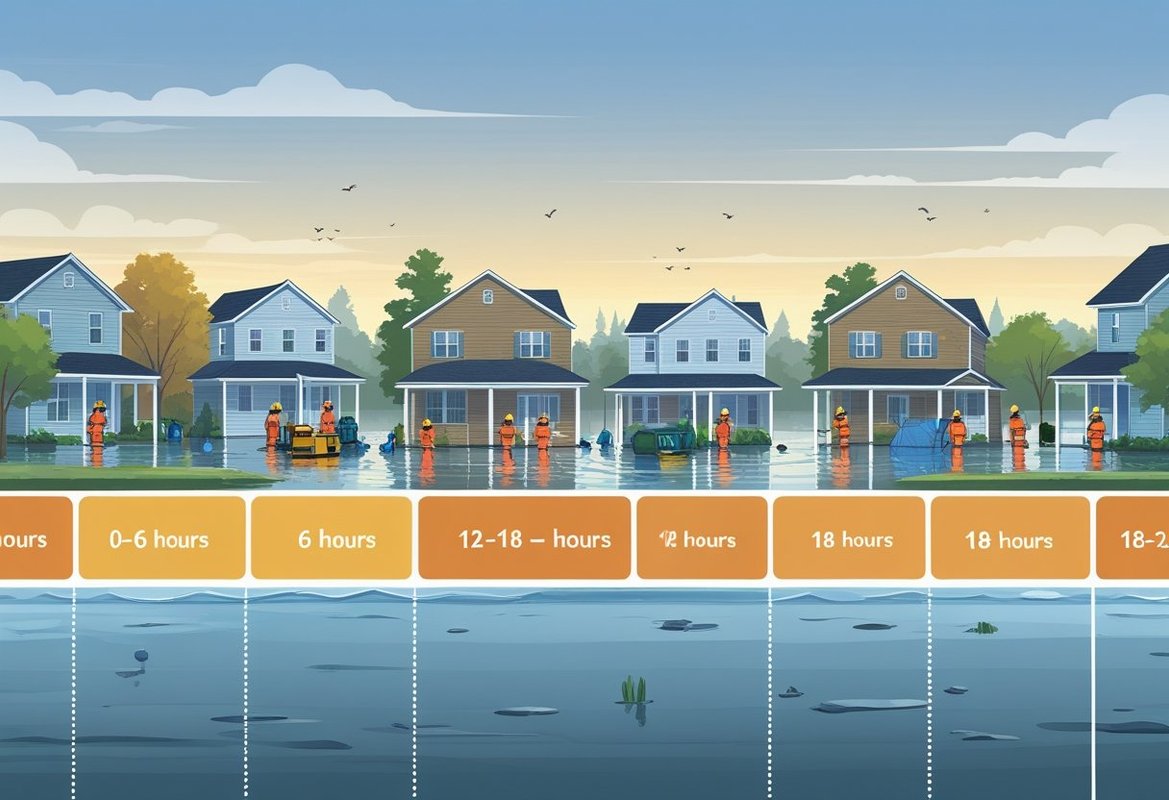
The Critical First 24 Hours: A Timeline for Flood Cleanup and Essential Recovery Steps
A flooded home in the Atlanta, GA area—maybe in Decatur or Roswell—can feel absolutely overwhelming. What you do in those first 24 hours really sets the stage for how recovery unfolds.
Acting fast to keep everyone safe, limit damage, and prevent long-term headaches like mold? That’s what keeps repairs manageable and costs from spiraling. If you’ve got a clear plan, even this short window can feel less chaotic.
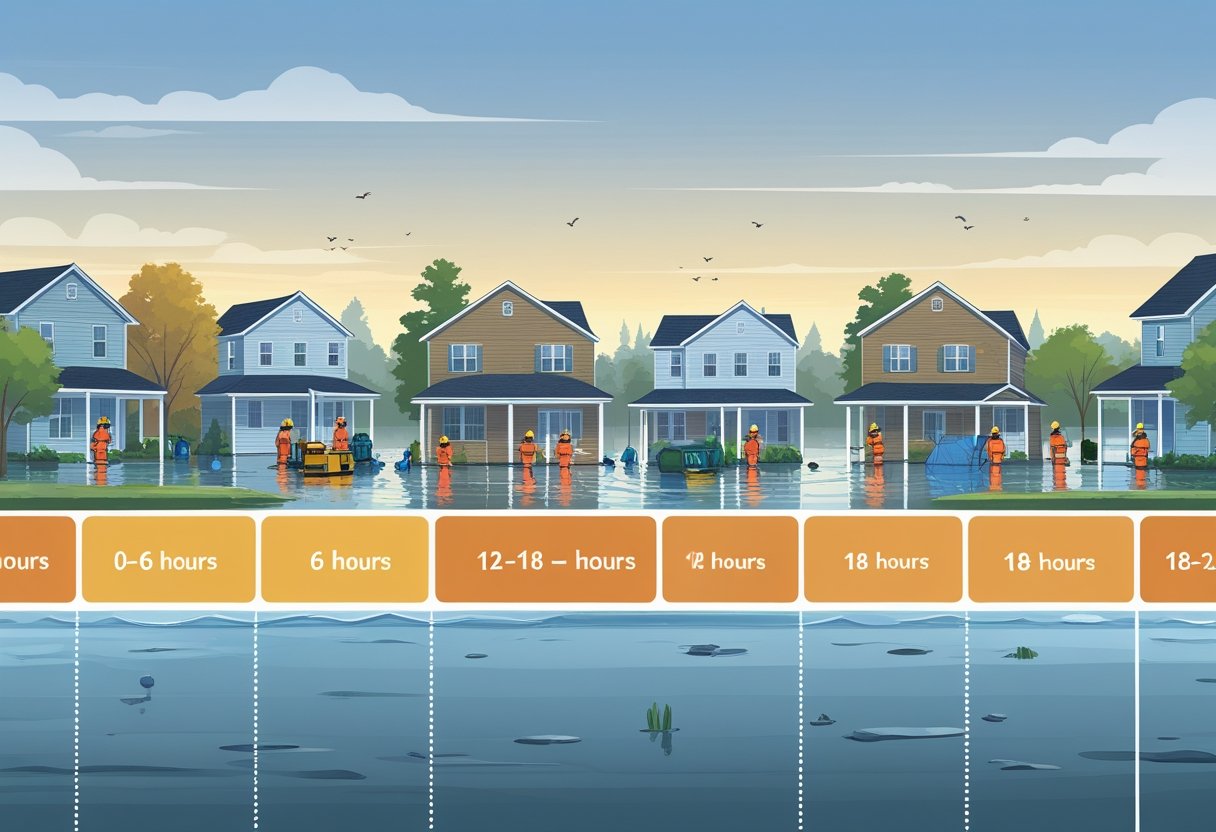
The process kicks off with safety—checking for hazards, documenting losses, reaching out to insurance, then rolling up your sleeves for cleanup. Each step matters, from stopping more hazards to drying out the space and figuring out what you can save.
Immediate Safety Measures

Flood cleanup always starts with keeping people safe and preventing more property damage. Folks need to check the building’s condition, be careful with utilities, and protect themselves from the nasty stuff in floodwater.
Assess Structural Integrity
Before anyone walks into a flooded house—say in Marietta, GA—they should look for structural damage. Cracked walls, sagging ceilings, or buckled floors are bad news. If the foundation looks like it shifted or there are big gaps, it’s probably not safe to go in.
It’s smart to check things from the outside first. Leaning walls, busted windows, or doors that won’t close right? Those are red flags. If you spot them, wait for a pro to inspect.
Inside, move slowly and avoid stepping on damaged floors. Use a flashlight, not candles or lighters—gas leaks are a real risk after floods.
Shut Off Utilities Safely
Flooding can wreck electrical systems, gas lines, and water pipes. Turn off utilities if you can reach the breaker or gas valve safely—never wade into water to do it.
If water’s covering outlets or the breaker box, don’t touch anything. Call the utility company and let them handle it. Smell rotten eggs or hear hissing? That could be a gas leak—get out and call emergency services.
Shut off the main water valve to keep more contaminated water from coming in. These steps protect both your home and the people inside.
Protect Against Contaminated Floodwaters
Floodwater is usually full of sewage, chemicals, and debris. Don’t touch it with bare skin. Wear rubber boots, gloves, and a mask if you have to go in.
Anything floodwater touches is probably contaminated. Toss food, mattresses, and soaked carpets—they’re not worth saving. Hard surfaces can usually be scrubbed with soap and disinfectant.
Mold can start growing in as little as a day. Get wet stuff out and get air moving as soon as possible. Your health depends on it.
Documenting Flood Damage for Insurance

Solid records help insurance claims move faster. If you’re in Sandy Springs or Smyrna, GA, and need to prove what happened, documentation is your best friend.
Take Photos and Videos
Take clear photos of every room before you touch anything. Get wide shots and close-ups—show warped floors, soaked walls, or ruined furniture.
Shoot from different angles and include things like doors or appliances for reference. Videos help too—a slow walk-through can capture details photos miss. If you can, make sure files are date-stamped.
Create a Detailed Inventory
Write down every damaged item. List the item, brand, model, when you bought it, and what you think it’s worth. Attach receipts if you have them.
Here’s a quick example:
| Item | Brand/Model | Purchase Date | Estimated Value | Condition |
|---|---|---|---|---|
| Sofa | Ashley, 3-seat | 2021 | $750 | Water-soaked |
| Refrigerator | GE GTS18 | 2019 | $1,000 | Not working |
This makes things easier for both you and your adjuster.
Preserve Damaged Materials
Don’t throw out damaged flooring, drywall, or big furniture until the insurance adjuster sees them. If you need to move things for safety, stash them in the garage, a shed, or under a tarp outside.
Bag up smaller stuff and label it. Keeping samples—like a chunk of carpet or drywall—can help prove the extent of the damage.
Initiating the Insurance Claims Process
Acting quickly with your insurance company gets you help sooner. Notify your provider, check your policy, and work with the adjuster to document everything.
Contact Your Insurance Provider
Call your insurance company as soon as possible—most want claims within 24-48 hours. Have your policy number, the date and time of the flood, a description of the damage, and your photos or videos ready.
Many companies use apps or online portals for claims. It’s usually faster and creates a digital record.
If you need to make temporary repairs, save the receipts. Insurers often reimburse for emergency work, but you’ll need proof.
Understand Your Policy Coverage
Flood insurance is a whole different thing from regular homeowners insurance. Most homeowners policies don’t cover floods; you’ll need a separate policy, often from the National Flood Insurance Program (NFIP) or a private insurer.
Check your policy to see what’s covered and what isn’t. Here’s a quick look:
| Covered | Not Covered |
|---|---|
| Structural damage to the home | Temporary housing costs (unless added) |
| Electrical and plumbing systems | Cash, precious metals, or stock certificates |
| Built-in appliances | Landscaping or outdoor decks |
Know your coverage limits and deductibles—your settlement might not cover everything. If anything’s unclear, ask your claims rep.
Communicate With the Insurance Adjuster
After you file, an adjuster comes out to inspect. Be ready with your inventory, samples, and receipts for big items.
Show them all the damage—even stuff that’s not obvious, like water behind walls. Hidden problems can get worse fast.
The first payment is usually just an advance. More may come after repairs are confirmed. Stay in touch and keep records of every conversation.
Water Removal and Drying Procedures
Getting water out fast is key. The longer it sits, the more damage it does—and the higher the risk for mold, especially in humid spots like College Park, GA.
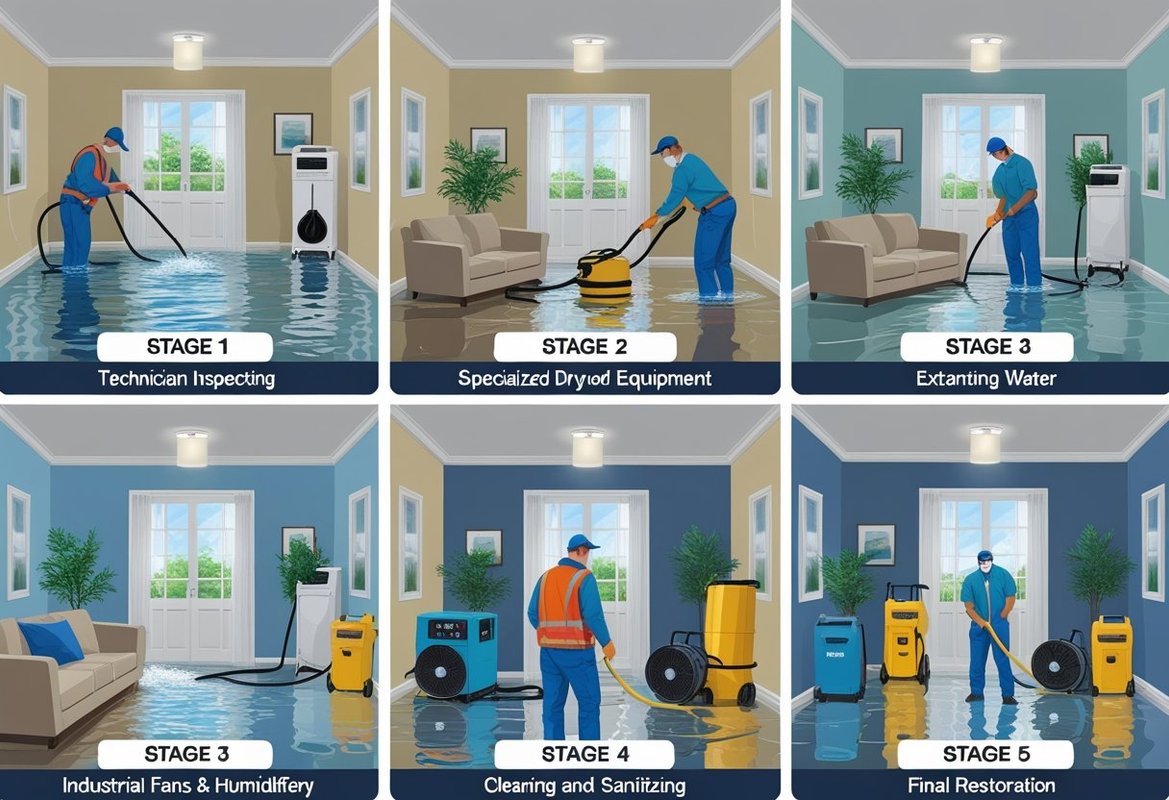
Extract Standing Water
Remove standing water as soon as you can. It seeps into floors, drywall, and furniture quickly.
Small spills? Buckets and mops work. Bigger jobs need wet vacuums or, for the worst cases, pros with truck-mounted units.
Don’t forget crawl spaces, basements, and behind walls. Even shallow puddles can cause mold in a day or two.
Use Sump Pumps and Wet Vacuums
Sump pumps are great for basements and low spots. They move a lot of water fast.
Wet vacuums handle smaller areas or leftover dampness. They’re built for liquids and safer than regular vacuums.
Often, people use both: pump out the bulk, then vacuum up the rest. It’s a solid combo for speeding up drying.
Employ Dehumidifiers and Fans
After the water’s gone, moisture still lingers. Dehumidifiers pull water from the air, lowering humidity and stopping mold. Commercial units can remove gallons a day.
Set up fans for cross-ventilation. Box fans, air movers—whatever you’ve got helps.
Dehumidifiers and fans together work best. Don’t skip this step before repairs; hidden moisture can wreck drywall and floors even after things look dry.
Sorting and Salvaging Belongings
Floods leave belongings wet, dirty, and at risk for mold. Quick action can save what’s salvageable and get rid of things that are unsafe.
Separate Damaged and Undamaged Items
Sort everything into two piles: what you can save and what you can’t. Move wet stuff—furniture, clothes, electronics—to a dry, airy spot. If it’s nice out, put them outside to stop mold.
Use plastic bins or tarps to keep good items away from contaminated water. Here’s a cheat sheet:
| Item Type | Likely Salvageable | Not Salvageable |
|---|---|---|
| Solid wood furniture | Yes, if dried quickly | No, if warped or cracked |
| Upholstered items | Rarely, mold grows fast | Usually not salvageable |
| Electronics | Sometimes, if not powered | No, if submerged |
Sorting early keeps things organized and stops contamination from spreading.
Protect Valuable Documents
Important papers like birth certificates and insurance policies often get soaked. Rinse them gently with clean water, then air-dry or freeze them in sealed bags to stop mold.
Freezing buys time if you’re not sure what needs professional help. Lay them flat on paper towels, changing the towels often.
Scan or snap photos of documents as you go. Digital backups are a lifesaver if originals can’t be saved.
Dispose of Contaminated Materials
Some stuff just can’t be saved—anything soaked with sewage, fuel, or chemicals should go. That usually means carpets, mattresses, and drywall.
Bag small items in heavy-duty trash bags, and call your local waste service for big debris.
Always wear gloves, masks, and boots when handling this stuff. Getting rid of unsafe materials quickly cuts health risks and helps you move forward.
If you’re dealing with a flood in Alpharetta, GA or anywhere around Atlanta, these steps can make a tough day a little more manageable.
Mold Prevention and Remediation
Mold can start growing within 24 to 48 hours after water exposure. You’ve got to act fast—remove moisture, clean up, and keep an eye out for early signs.
Detect Hidden Moisture
Moisture hides in walls, floors, or ceilings, often escaping notice. It creates a perfect breeding ground for mold in places you might not even think to check.
You can’t rely on a visual inspection alone. Water sneaks behind drywall, under flooring, or into insulation without leaving obvious clues.
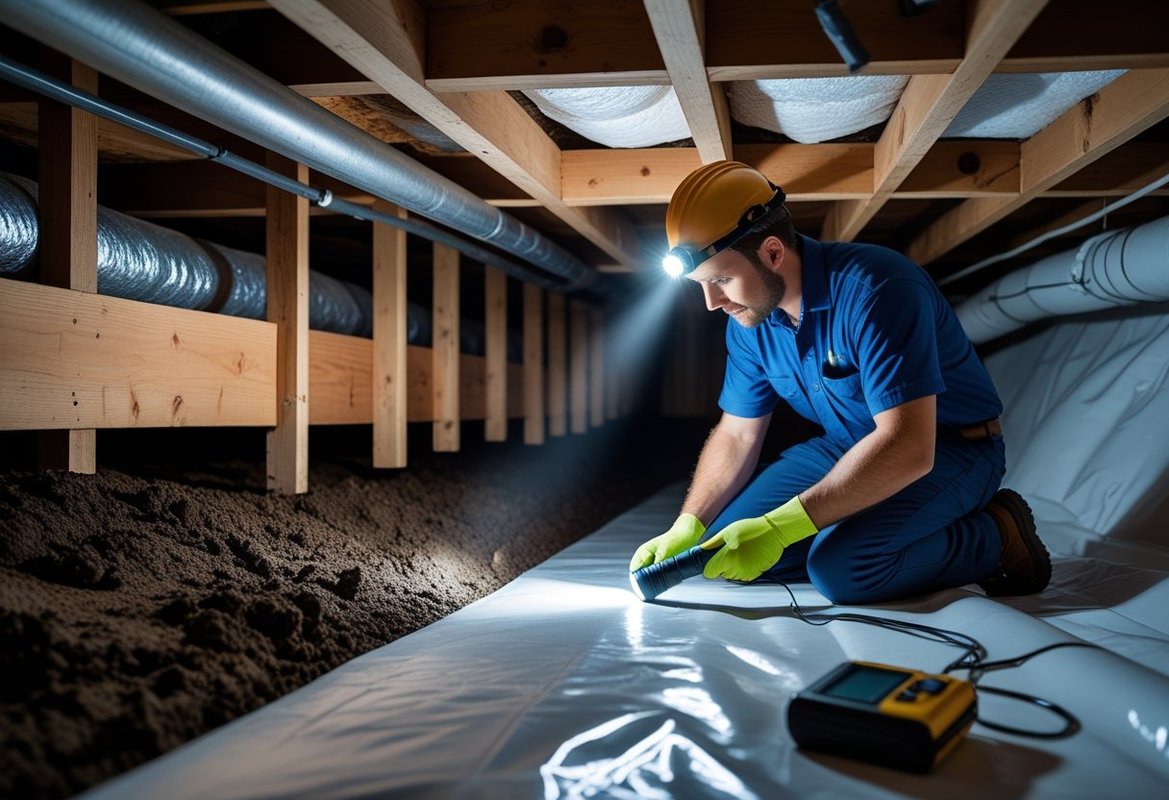
Tools like moisture meters and thermal imaging cameras help you find damp spots that look dry on the surface. They’ll show you where water lingers and where you need to focus your mold prevention efforts.
Don’t forget to check less obvious spots—HVAC ducts, crawl spaces, and behind cabinets. If you’re in Alpharetta, GA, or Roswell, GA, running dehumidifiers and fans until everything’s dry is essential.
Clean and Disinfect Surfaces
After you’ve removed standing water, clean and disinfect anything that got wet. This step keeps mold spores from grabbing hold on hard surfaces like concrete, tile, or metal.
A two-step process usually does the trick:
- Wash with detergent and water to get rid of dirt and debris.
- Disinfect using an EPA-registered cleaner to kill whatever’s left.
Scrub thoroughly, especially in joints, seams, and corners where moisture hangs out. Wear gloves, goggles, and a mask to protect yourself from mold spores and harsh chemicals.
Clean and dry wood framing and subfloors quickly. Even if you don’t see mold yet, damp wood can become a problem in just a few days.
Remove Porous Materials
Some materials just soak up water and can’t be salvaged. Drywall, carpet, padding, and insulation usually have to go if they’ve been saturated.
Cut out wet drywall at least a foot above the waterline. This helps prevent hidden mold in wall cavities, which is a big concern in places like Decatur, GA.
Carpet that’s been soaked for more than a day is rarely worth saving. Mold can hide deep in the fibers.
Furniture, mattresses, and paper products are tough to clean thoroughly. As much as it hurts to toss them, keeping these things almost guarantees more mold trouble down the line.
Monitor for Mold Growth
Even after cleaning up, you need to keep watching for mold. Check surfaces daily for a week or so—look for discoloration, musty smells, or fuzzy patches.
Keep indoor humidity below 50%. A cheap hygrometer can help you track this. Running dehumidifiers and keeping air moving makes a big difference.
If you spot mold anyway, it’s time to call in the pros. If you’re getting [[[[[[[[[[[[[[[[[[[[[[[[[mold remediation in Marietta](https://water-damage-atlanta.com/marietta/mold-remediation)](https://water-damage-atlanta.com/marietta/mold-remediation)](https://water-damage-atlanta.com/marietta/mold-remediation)](https://water-damage-atlanta.com/marietta/mold-remediation)](https://water-damage-atlanta.com/marietta/mold-remediation)](https://water-damage-atlanta.com/marietta/mold-remediation)](https://water-damage-atlanta.com/marietta/mold-remediation)](https://water-damage-atlanta.com/marietta/mold-remediation)](https://water-damage-atlanta.com/marietta/mold-remediation)](https://water-damage-atlanta.com/marietta/mold-remediation)](https://water-damage-atlanta.com/marietta/mold-remediation)](https://water-damage-atlanta.com/marietta/mold-remediation)](https://water-damage-atlanta.com/marietta/mold-remediation)](https://water-damage-atlanta.com/marietta/mold-remediation)](https://water-damage-atlanta.com/marietta/mold-remediation)](https://water-damage-atlanta.com/marietta/mold-remediation)](https://water-damage-atlanta.com/marietta/mold-remediation)](https://water-damage-atlanta.com/marietta/mold-remediation)](https://water-damage-atlanta.com/marietta/mold-remediation)](https://water-damage-atlanta.com/marietta/mold-remediation)](https://water-damage-atlanta.com/marietta/mold-remediation)](https://water-damage-atlanta.com/marietta/mold-remediation)](https://water-damage-atlanta.com/marietta/mold-remediation)](https://water-damage-atlanta.com/marietta/mold-remediation)](https://water-damage-atlanta.com/marietta/mold-remediation), GA, specialists can test the air, remove contaminated materials, and treat surfaces. Catching new mold early keeps it from spreading.
Professional Assessment and Structural Repairs
Flood cleanup takes more than just drying things out. There’s always a risk of structural damage, hidden moisture, or safety hazards that need expert attention.
Hire Licensed Contractors
A licensed contractor is your go-to when your home or building has structural damage from flooding. They know how to spot foundation problems, warped framing, or weakened support beams—stuff most people miss.
Always check credentials before hiring. Look up state licensing boards and ask for proof of insurance. This helps you avoid shoddy work or unsafe repairs in places like Sandy Springs, GA.
Licensed contractors handle:
- Foundation cracks or shifts
- Replacing damaged drywall, floors, or insulation
- Fixing electrical and plumbing systems affected by water
They also make sure repairs meet local building codes. That’s crucial, because bad repairs can mean failed inspections and bigger headaches later.
Evaluate Need for Restoration Professionals
Restoration pros focus on water damage and work with contractors. They tackle hidden issues—trapped moisture, mold, and contamination from floodwater.
They use moisture meters, industrial dehumidifiers, and air scrubbers to restore safe indoor conditions. Unlike general contractors, restoration specialists are trained to handle sanitization and mold remediation.
Call restoration professionals when:
- Water has soaked into walls, ceilings, or subfloors
- Mold is visible or suspected
- Floodwater brought in sewage or other nasty stuff
Combining structural repairs with professional restoration keeps your property safe, sound, and ready to live in again.
When you're ready to hire, browse vetted flood cleanup companies near Atlanta to find certified specialists.
Planning for Long-Term Flood Recovery
Long-term recovery is all about making homes tougher, improving protection, and making sure you’ve got insurance. Each step lowers your risk and helps you bounce back faster if flooding hits again.
Implement Flood-Resistant Materials
Flood-resistant materials save you time and money on future repairs. Concrete, tile, and pressure-treated wood handle water better than carpet or regular drywall.
In places like Brookhaven, GA, people often swap out damaged drywall for cement board, which resists mold. Ceramic tile or sealed concrete floors are easier to clean and less likely to warp.
Upgrade these areas:
- Walls: Closed-cell spray foam insulation beats fiberglass.
- Floors: Skip carpet in flood-prone rooms.
- Cabinets: Go for metal or marine-grade plywood.
Yes, these upgrades can cost more upfront, but they pay off by making recovery easier next time.
Upgrade Flood Protection Systems
Mechanical and structural upgrades matter too. Elevate electrical outlets, wiring, and HVAC units above flood levels to avoid expensive repairs. Sump pumps with battery backups help clear water during power outages.
Install flood barriers or backflow valves to keep water out of drains and sewer lines. In high-risk areas like Smyrna, GA, elevating your whole house on piers or stilts might be worth considering.
Checklist:
- Raise appliances above base flood elevation
- Add check valves to plumbing
- Improve exterior grading and drainage
These changes protect your most expensive systems and cut down on post-flood downtime.
Review and Update Flood Insurance
Flood insurance is a must. Standard homeowners’ policies don’t cover flood damage, so you’ll need a separate policy from the National Flood Insurance Program (NFIP) or a private insurer.
Check your coverage limits for both the building and its contents. If you’ve got a finished basement or lots of electronics, you may need extra coverage.
Don’t forget about the waiting period. NFIP policies usually take 30 days to kick in, so don’t wait until the last minute.
Keeping your insurance up to date means you’ll have the help you need for cleanup and repairs after a flood.
Frequently Asked Questions
Flood cleanup is all about acting fast, documenting everything, and staying safe. Focus on your health, prevent mold, and work with insurance and pros when you need to.
What are the initial steps to take immediately after a flood?
First, make sure the area’s safe before you enter. Shut off electricity and gas if you haven’t already. Sometimes, you’ll need to call local authorities or the utility company before starting cleanup.
How should you assess and document damage for insurance purposes?
Take plenty of photos and videos of all damage. Write down dates and descriptions for your records. Don’t throw anything away until the insurance adjuster has seen it.
What is the recommended procedure for drying out a flooded property?
Remove standing water fast with pumps or wet vacuums. Use fans and dehumidifiers to speed up drying. If the weather’s good, open windows. Saturated carpets, drywall, and insulation usually need to go.
What are the best practices for mold prevention following a flood?
Dry everything within 24 to 48 hours to stop mold. Scrub non-porous surfaces with cleaning solutions. Throw out porous stuff like carpet and mattresses. Keep checking for musty smells or visible mold.
Which items should be prioritized for cleaning or disposal after a flood?
Clean and disinfect hard surfaces like metal, glass, and plastic. Toss upholstered furniture, paper products, and any food that touched floodwater. You can usually save clothing and linens if you wash them in hot water.
What are the safety precautions to consider during flood cleanup?
Wear protective gear like gloves, boots, and masks. This helps you avoid contact with contaminated water.
Keep kids and pets far from flooded areas. Don't let them wander in until things are safe.
Check for hazards before you step inside. Watch out for weak floors or walls, especially if you're dealing with flood cleanup in Decatur, GA or anywhere around Atlanta.
For a companion guide, read what to do after basement flooding in Atlanta.
Water Damage Atlanta Editorial Team
Restoration & Home Services Expert
We help Atlanta homeowners recover from water damage with trusted advice and local resources.