Mold Remediation vs. Mold Removal: Key Differences and Best Practices
Mold inside a home isn’t just ugly. It can mess with your air quality, damage surfaces, and cause ongoing headaches if you don’t handle it right.
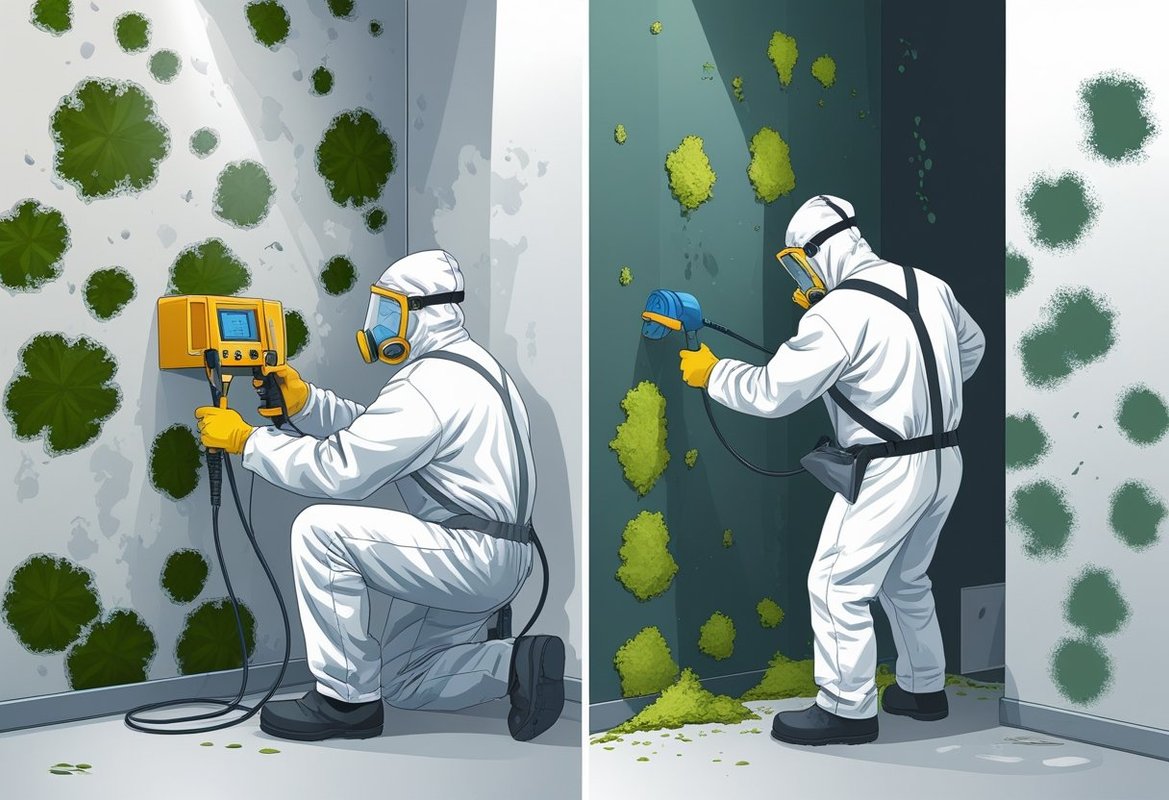
Mold Remediation vs. Mold Removal: Key Differences and Best Practices
Mold inside a home isn’t just ugly. It can mess with your air quality, damage surfaces, and cause ongoing headaches if you don’t handle it right.
Lots of people mix up mold removal and mold remediation, but they’re not the same. Mold removal means cleaning what you can see, while mold remediation tackles the mold you can’t see—and the reasons it keeps coming back.
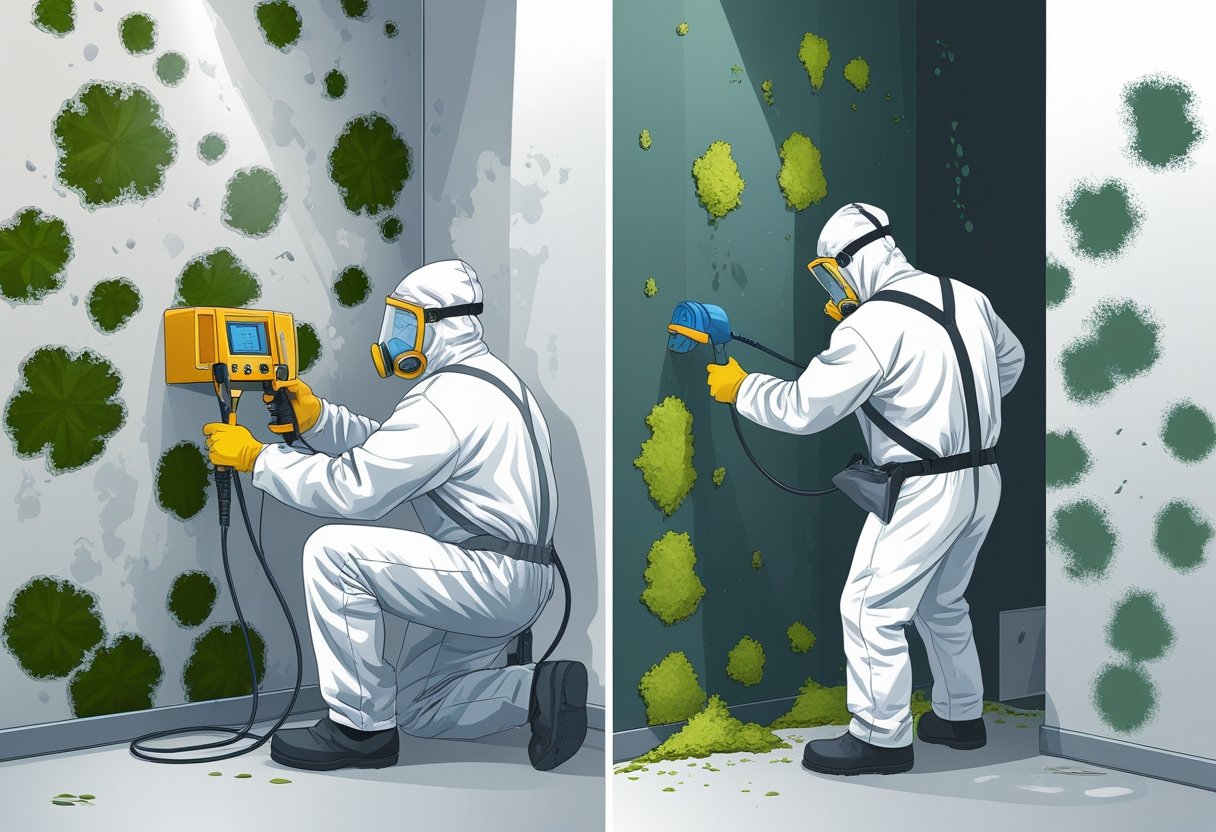
Surface cleaning might look good for a while, but mold can return if you don’t fix what’s causing it. Remediation digs deeper—finding moisture sources, stopping the spread, and actually preventing future outbreaks.
If you live in the Atlanta, GA area—say, in Decatur, Marietta, or Sandy Springs—knowing the difference can save you a lot of money and stress. Let’s break down what mold is, what it does to your health and property, and how to choose the right approach.
Understanding Mold and Its Impact
Mold is a fungus that spreads through tiny spores. It loves damp, humid spots and can wreck your building materials, lower air quality, and even cause health problems.
What Is Mold?
Mold belongs to the fungi family. Unlike plants, it doesn’t need sunlight—it feeds on things like wood, paper, and fabric.
It spreads by shooting out mold spores—so small you can’t see them. These spores float around and land anywhere there’s moisture.
Mold comes in all sorts of colors: black, green, white, orange. Some types aren’t much of a problem, but others can create serious mold issues inside.
Usually, you won’t notice mold right away. Spores are always in the air, but trouble starts when indoor conditions let them grow.
Common Causes of Mold Growth
Mold almost always means there’s too much moisture somewhere. Leaky pipes, roofs, or windows set the stage for mold to thrive.
Flooding or bad drainage can soak floors and walls, giving mold a place to move in.
High humidity—especially in bathrooms, kitchens, and basements—makes things worse. These rooms trap moisture, and without good airflow, surfaces stay wet.
Even simple stuff like drying clothes indoors or skipping the exhaust fan can up your mold risk. Don’t ignore spills or small leaks; they add up fast.
Health and Structural Risks of Mold
Breathing in mold can trigger coughing, sneezing, skin rashes, or eye irritation. If you have asthma, allergies, or a weak immune system, it can hit you even harder.
Mold eats away at drywall, wood, carpet, and insulation. Over time, it weakens your home’s structure and can lead to expensive repairs.
It also stinks—literally. Spores in the air spread that musty smell and can start new colonies in other rooms.
If you let it grow unchecked, mold can tank your property value and create long-term safety issues.
Defining Mold Removal
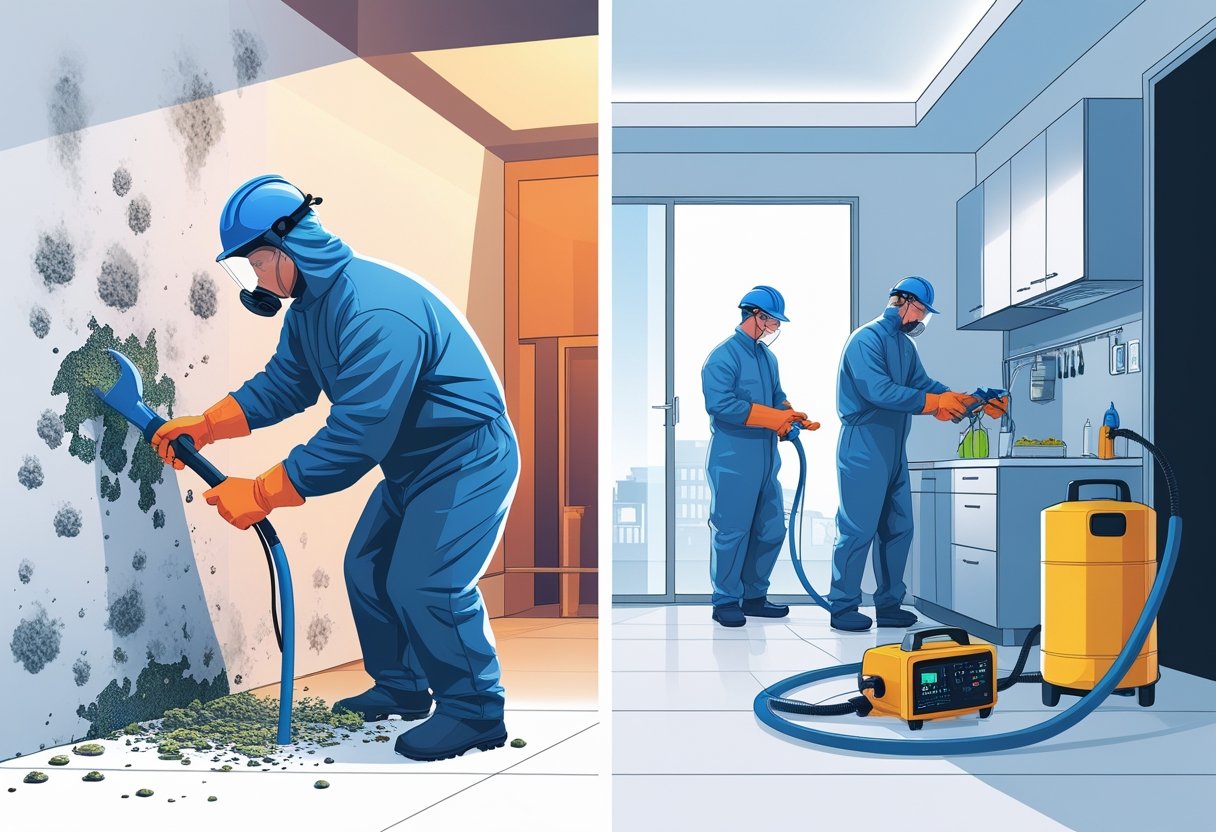
Mold removal is all about getting rid of visible mold. It’s a quick fix—scrubbing or cleaning what you can see—but it doesn’t always solve the underlying problem.
What Mold Removal Involves
You (or a pro) might wipe, sand, or use cleaning sprays to clear away mold. Sometimes, you have to toss things like carpet or drywall if the mold’s gotten deep.
Most people use disinfectants, antifungal sprays, or bleach to kill surface mold. But again, this only hits what’s on the surface.
Mold removal doesn’t usually include air quality checks, sealing off rooms, or fixing leaks. It’s faster and cheaper than remediation, but if there’s hidden mold or moisture, it won’t last.
Limitations of Mold Removal
The big problem with mold removal? It ignores hidden mold and the real reasons mold keeps coming back.
Mold often hides behind walls or under floors—places you can’t reach with a sponge. If you don’t fix leaks or humidity, it’ll just grow back.
Spores are tiny. Cleaning what you see doesn’t mean you’ve gotten rid of what’s floating around or hiding out of sight.
So, mold removal can look good for a bit, but it’s usually just a band-aid.
When Mold Removal Is Appropriate
Mold removal works when the problem is small and easy to spot—like a bit of mold on bathroom tile, a patch on a wall, or some on a window sill.
If you’ve already fixed the moisture issue and the area is contained, you might get away with just removing the mold.
In apartments, offices, or schools around Atlanta, GA, people sometimes use mold removal for quick cleanups. But if the problem is bigger or keeps coming back, you’ll need remediation.
Defining Mold Remediation
Mold remediation is about more than just cleaning. It’s about controlling mold growth, removing contaminated stuff, and fixing the moisture issues that let mold spread.
The goal is to make your space safe—not just look clean.
What Mold Remediation Involves
Remediation is a step-by-step process, usually done by pros. They target both visible and hidden mold—behind walls, under floors, or above ceilings.
Companies use things like HEPA air filters, antimicrobial treatments, and dehumidifiers. They’re not trying to wipe out every single spore (that’s impossible), but they want to get levels back to normal and stop mold from coming back.
Fixing the source of moisture is a must. Without that, you’re just spinning your wheels.
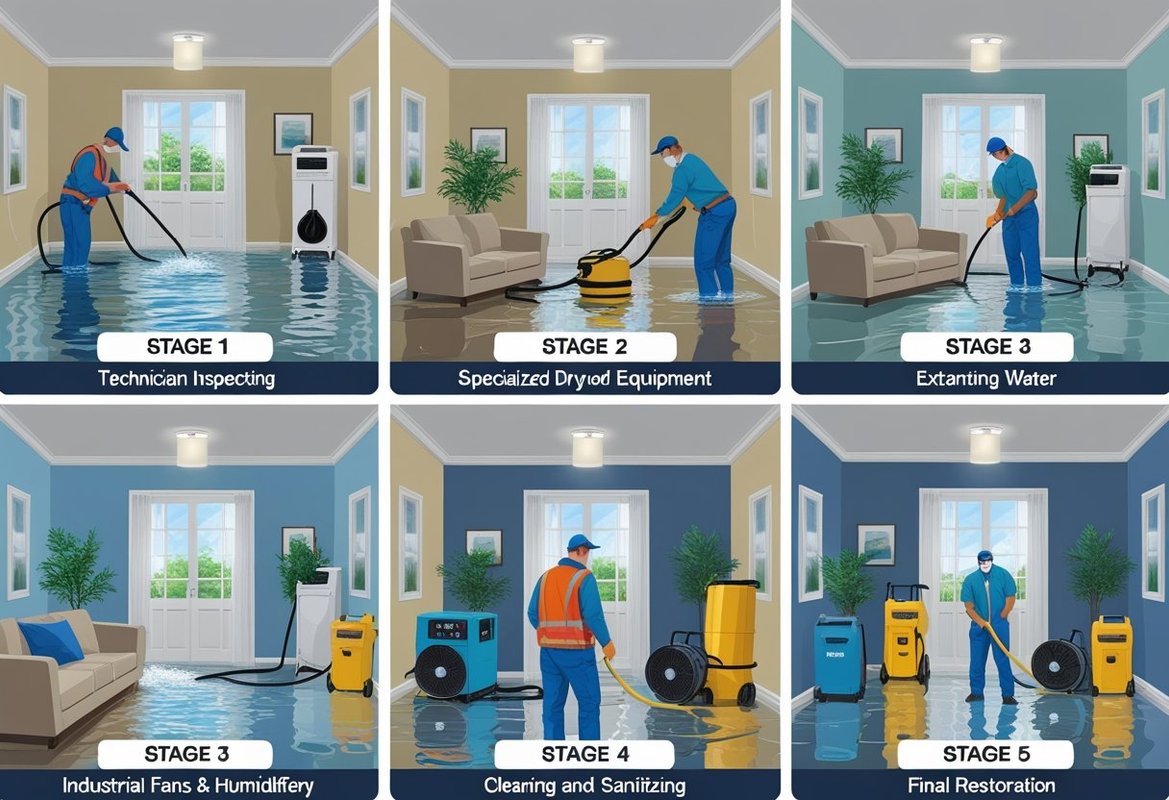
Key Steps in the Remediation Process
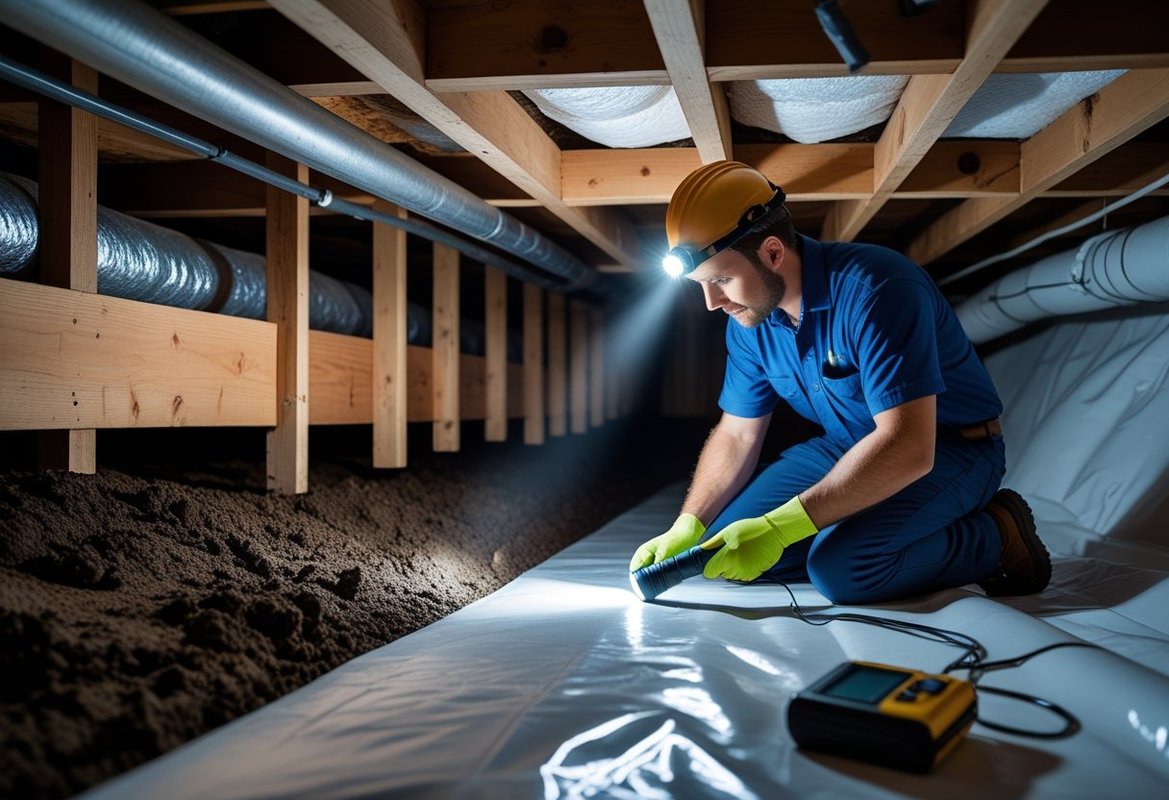
First, pros inspect your home to find out how far the mold’s spread. They might use moisture meters or thermal cameras to spot hidden trouble.
Next, they seal off the area—using plastic sheeting and machines that create negative air pressure. This keeps spores from spreading.
Damaged materials like drywall or carpet get ripped out if they’re too far gone. Remaining surfaces are cleaned with antimicrobial treatments, and air scrubbers catch spores in the air.
Finally, they dry things out with dehumidifiers. If you don’t get the moisture under control, the mold will just come back.
When Mold Remediation Is Necessary
Remediation is a must when mold covers a big area or gets into stuff you can’t clean. The EPA says call a pro if you’ve got more than 10 square feet of mold.
If you find mold in your HVAC system, get help—spores can spread through the whole house. Hidden mold behind walls or under floors also needs professional attention.
If you or someone in your home has asthma, allergies, or a weak immune system, don’t wait. In rental homes, schools, or offices in places like Roswell or Alpharetta, remediation is often required by law.
Comparing Mold Remediation and Mold Removal
Both methods deal with mold, but they’re not created equal. One just cleans up what you see, while the other solves the problem at its root.
Scope and Effectiveness
Mold removal is about wiping away what you can see. It can make a room look better, but it doesn’t always fix hidden problems.
Mold remediation takes a bigger-picture approach. It finds all the mold, tests air quality, and addresses the moisture that lets mold spread.
In short:
- Mold removal: surface-level.
- Mold remediation: tackles both what you see and what you don’t.
Remediation is way more effective for keeping mold away long-term.
Short-Term vs. Long-Term Solutions
Mold removal is a quick fix. It works for small, surface-level problems, but mold can come back fast if moisture sticks around.
Remediation is built for the long haul. By fixing leaks, humidity, and airflow, it keeps mold from returning. Some companies even do follow-up checks.
Quick comparison:
| Approach | Duration of Results | Risk of Recurrence |
|---|---|---|
| Mold Removal | Temporary | High |
| Mold Remediation | Long-lasting | Low |
If you want peace of mind, remediation is usually worth it.
Surface-Level vs. Root Cause Approaches
Mold removal is just that—removal. Scrub, spray, done. But it won’t reach mold hiding in walls or air ducts.
Remediation finds and fixes the root cause. Pros track down leaks or condensation, use dehumidifiers, and might recommend better ventilation.
By controlling the environment, remediation keeps mold from coming back. That’s a lot more reassuring than just cleaning up the mess.
Professional Services and DIY Considerations
How you handle mold depends on how much you’re dealing with, where it is, and who’s at risk. Small spots might be fine for DIY, but big or hidden problems need pro help.
Benefits of Hiring Professionals
Pros have tools most of us don’t—HEPA vacuums, air scrubbers, and barriers to keep spores from spreading. This protects your air quality and helps prevent new outbreaks.
They also find and fix the moisture source. If you don’t do that, any cleaning is just temporary. Professional remediation combines cleanup with prevention, so you’re not fighting the same battle next month.
Hiring a licensed company gives you paperwork. That’s handy for insurance or if you’re selling your home—especially in competitive markets like Atlanta, GA.
Yes, it costs more than DIY, but it can save you money in the end by avoiding repeat problems or structural damage. If you’ve got more than 10 square feet of mold, call a pro.
Risks of DIY Mold Solutions
DIY might seem cheaper, but it’s risky. Without real protective gear, you can breathe in spores that mess with your health.
Bleach and store-bought cleaners don’t always work, especially on porous materials like drywall or wood. You could end up spreading spores to new areas—scrubbing without containment just scatters the problem.
DIY is okay for tiny, visible spots—like grout in your bathroom. Wear gloves, goggles, and a mask to stay safe. For anything bigger, or if you’re not sure how deep it goes, don’t risk it.
A lot of times, what looks like a small patch is just the tip of the iceberg. If you skip inspection and testing, you could miss a much bigger issue and pay more later.
Preventing Mold Issues in the Future
Mold will keep coming back if you don’t fix what’s causing it. Focus on keeping things dry, improving ventilation, and cleaning up spills or leaks fast—especially if you’re in humid spots like East Point or College Park, GA.
Moisture Control Strategies
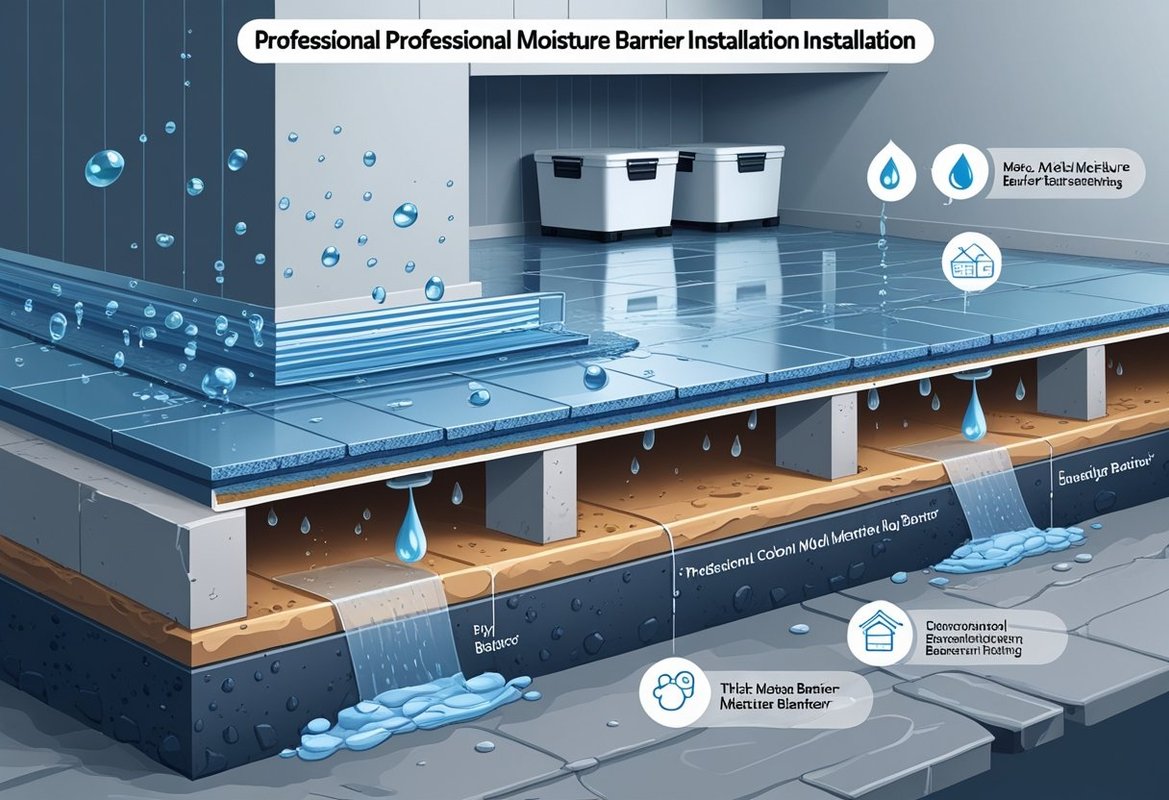
Mold spores are everywhere, but they only start growing when things get damp. If you keep humidity below 50%, you’re already ahead of the game.
A dehumidifier works wonders in places like basements or bathrooms around Atlanta, GA, where moisture loves to collect.
Fix leaks from pipes, roofs, or windows fast. Even a tiny drip can let mold get a foothold.
After any water damage, dry surfaces within 24–48 hours. That short window really matters.
Ventilation helps a lot, too. Exhaust fans in kitchens and bathrooms cut down on steam, while moving air keeps dampness from sticking around.
Sometimes, adding insulation to cold windows or walls can stop condensation from forming. That’s a simple trick that’s surprisingly effective, especially in older homes around Decatur or Smyrna.
Ongoing Maintenance Tips
Even after you’ve solved moisture issues, regular upkeep is crucial for keeping mold away.
A quick cleaning routine—like wiping down bathroom tiles with vinegar—can help keep things under control.
Don’t forget the hidden spots. Basements, attics, and crawl spaces in places like Roswell or Sandy Springs can trap moisture and go unchecked for months.
Take a peek at these areas a few times a year. Early detection really saves headaches down the line.
Replace HVAC filters on schedule. Clean filters mean better airflow and fewer spores blowing through your ducts.
Clear out gutters, too. Clogged gutters can cause water to back up into your walls or ceilings, especially during those Atlanta summer storms.
Frequently Asked Questions
Mold problems can take a few different forms, and how you handle them depends on whether you’re just cleaning up or actually fixing what’s causing the issue.
What is the distinction between mold remediation and mold removal?
Mold removal means cleaning or tossing materials with visible mold.
Mold remediation digs deeper by finding and fixing what let the mold grow in the first place—like excess moisture or bad ventilation.
Is mold remediation more effective than mold removal for long-term solutions?
Absolutely. Mold remediation does a better job for the long haul because it tackles the root cause and brings mold down to safer levels.
Just removing mold might make things look better for a bit, but it won’t stop it from coming back if you don’t fix the underlying problem.
Can mold removal completely eliminate mold from a home or building?
Nope. Mold spores are always in the air, even if you can’t see them.
You can get rid of visible mold, but only remediation helps keep the problem in check over time.
What are the typical steps involved in the process of mold remediation?
First, there’s an inspection and a moisture check.
Then, pros set up containment to keep mold from spreading, run air filtration, and remove contaminated stuff.
Finally, they clean, dry, and restore the area to help prevent mold from coming back.
How does mold remediation address the underlying causes of mold growth?
Remediation finds where moisture is sneaking in—whether it’s leaks, humidity, or lousy airflow.
Fixing leaks, boosting ventilation, or running a dehumidifier cuts down the dampness mold needs to take hold, whether you’re in Marietta, GA or right in downtown [Atlanta.
Are there any circumstances where mold removal](https://water-damage-atlanta.com/atlanta/mold-remediation) is preferable to remediation?
Yeah, sometimes mold removal makes more sense than full remediation. If you've just got a small, isolated spot—like a bit of fuzz on a bathroom wall in Sandy Springs, GA—it probably doesn't mean there's a bigger moisture issue.
People also go for removal as a quick fix when remediation can't happen right away. For example, maybe you're dealing with repairs or construction delays in Buckhead, GA, and you just need to keep things under control for now.
Read our comparison of DIY vs. professional black mold removal to decide what fits your situation.
Browse [certified [[[[[[[[[[[[[[[mold remediation companies in Atlanta](https://water-damage-atlanta.com/atlanta/mold-remediation)](https://water-damage-atlanta.com/atlanta/mold-remediation)](https://water-damage-atlanta.com/atlanta/mold-remediation)](https://water-damage-atlanta.com/atlanta/mold-remediation)](https://water-damage-atlanta.com/atlanta/mold-remediation)](https://water-damage-atlanta.com/atlanta/mold-remediation)](https://water-damage-atlanta.com/atlanta/mold-remediation)](https://water-damage-atlanta.com/atlanta/mold-remediation)](https://water-damage-atlanta.com/atlanta/mold-remediation)](https://water-damage-atlanta.com/atlanta/mold-remediation)](https://water-damage-atlanta.com/atlanta/mold-remediation)](https://water-damage-atlanta.com/atlanta/mold-remediation)](https://water-damage-atlanta.com/atlanta/mold-remediation)](https://water-damage-atlanta.com/atlanta/mold-remediation)](https://water-damage-atlanta.com/atlanta/mold-remediation)](https://water-damage-atlanta.com/marietta/companies) to find specialists in your area.
Water Damage Atlanta Editorial Team
Restoration & Home Services Expert
We help Atlanta homeowners recover from water damage with trusted advice and local resources.