Is Mold a Deal Killer? What to Do When Mold Shows Up on an Inspection Report

Is Mold a Deal Killer? What to Do When Mold Shows Up on an Inspection Report
You found the house. The offer got accepted. Then the inspection report comes back, and there it is — mold.
Before you panic, know this: mold on an inspection report doesn't automatically kill a deal. But it does change the conversation. What happens next depends on the type of mold, how much there is, where it is, and how the seller responds.
Our mold remediation team sees the aftermath of these real estate situations regularly. Here's what you actually need to know.
Table of Contents
- Not All Mold Is the Same
- Where Mold Shows Up Most Often in Home Inspections
- Should You Walk Away or Negotiate?
- How Mold Affects Home Value
- What Sellers Are Obligated to Disclose
- Who Pays for Mold Remediation in a Real Estate Transaction?
- What Buyers Should Ask For
- What Happens If You Buy a House with Mold and Didn't Know
- FAQ
Not All Mold Is the Same {#not-all-mold}
Inspection reports often lump mold together, but the reality is more nuanced. A small patch of surface mold in a bathroom is a very different situation from black mold spreading through a crawl space or behind drywall.
There are a few key distinctions:
Surface mold — Appears on tile grout, window sills, or exterior-facing walls. Usually results from condensation or poor ventilation. Often easy and inexpensive to treat.
Structural mold — Found inside walls, under flooring, in attic sheathing, or in a crawl space. More serious because it's harder to access, may indicate ongoing moisture intrusion, and can affect structural materials.
Black mold (Stachybotrys) — The most notorious type. Requires a specific moisture-saturated environment to grow and takes time to establish. Its presence usually signals a long-term, unresolved moisture problem.
The type and location of mold determines both the remediation cost and what it says about the underlying condition of the home.
Where Mold Shows Up Most Often in Home Inspections {#where-mold}
Some areas are more prone to mold than others, especially in Atlanta's humid climate.
Attics — Improper ventilation or a slow roof leak creates ideal mold conditions. Attic mold is extremely common and often goes unnoticed for years.
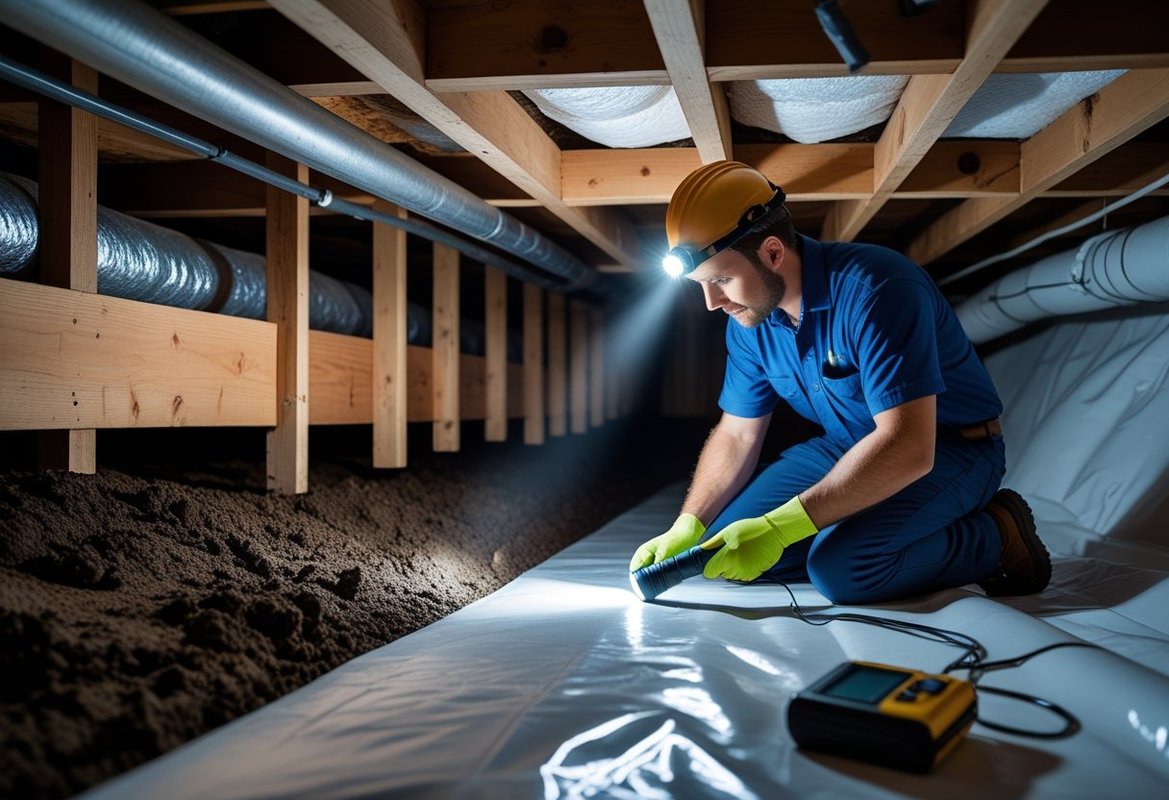
Crawl spaces — High humidity, standing water, and lack of airflow make crawl spaces a prime mold environment. In older Atlanta homes, this is one of the first places inspectors look.
Basements — Especially in homes with below-grade moisture intrusion or poor drainage.
Around HVAC systems — Condensation and ductwork create moisture hotspots. Mold in ducts is particularly problematic because it can spread spores throughout the home.
Bathrooms and kitchens — Surface mold here is common and less alarming, but hidden mold behind tile or under sinks can indicate plumbing issues.
Finding mold in a crawl space or attic isn't automatically a red flag if it's caught early and addressed. Finding extensive mold in multiple areas of a home is a different story.
Should You Walk Away or Negotiate? {#walk-or-negotiate}
In most cases, walking away isn't necessary — but negotiating is essential.
The key questions to answer before deciding:
- How extensive is the mold? (Single location vs. widespread)
- What's causing it? (Is the moisture source fixed or ongoing?)
- What will remediation actually cost?
- Will the seller address it, or are you on your own?
A minor mold issue in a bathroom or a small attic spot is negotiable and manageable. Extensive mold that signals structural problems, long-term water intrusion, or HVAC contamination is a much bigger decision.
For homeowners in Marietta and Atlanta's older neighborhoods, finding some mold during inspection is genuinely common — the question is always about scope and cause. Don't make a rash decision either way without getting a proper remediation assessment.
How Mold Affects Home Value {#home-value}
Mold's impact on home value depends on whether it's been disclosed, remediated, or is actively present at time of sale.
Untreated, disclosed mold — Buyers will typically negotiate a price reduction equal to or greater than the remediation cost. In a competitive market, some buyers will still walk.
Remediated mold with documentation — A professionally remediated home with clearance testing results and documentation actually sells better than a home with an undisclosed mold history. Buyers and their agents appreciate transparency.
Undisclosed mold discovered after closing — This becomes a legal problem (more on that below).
Real estate agents often see mold knock 10–20% off an asking price during negotiations, though this varies widely based on severity and market conditions.
What Sellers Are Obligated to Disclose {#disclosure}
In Georgia, sellers are required to disclose known material defects — and mold qualifies. The key word is "known." If a seller is aware of mold and doesn't disclose it, they're potentially liable for damages after the sale.
That said, sellers aren't required to inspect for mold before listing. If they genuinely didn't know about mold in the crawl space, there may be no legal recourse after closing.
This is exactly why buyer inspections matter so much. A thorough inspection — including a mold specialist if anything suspicious is found — is the best protection a buyer has.
If you're concerned about a specific mold situation, it's worth having a conversation with a real estate attorney in Georgia before closing. The laws here are specific and can affect your options significantly.
Who Pays for Mold Remediation in a Real Estate Transaction? {#who-pays}
This is almost always negotiated. There's no hard rule.
Option 1: Seller pays for full remediation before closing. The seller hires a licensed remediation company, completes the work, and provides clearance testing documentation. This is the cleanest outcome for buyers.
Option 2: Price reduction. The seller reduces the sale price by the estimated cost of remediation. The buyer handles it after closing. This works if you trust the estimate and want control over who does the work.
Option 3: Credit at closing. Similar to a price reduction but structured as a closing credit. Gives the buyer flexibility on how to use the funds.
Option 4: Deal falls apart. If the mold is severe, the seller won't negotiate, or the buyer's financing falls through (some lenders won't fund homes with active mold), the deal doesn't close.
For a deeper look at the difference between what remediation actually involves, see our overview of [mold remediation vs. [[[mold removal](https://water-damage-atlanta](https://water-damage-atlanta.com/atlanta/mold-remediation)](https://water-damage-atlanta.com/atlanta/mold-remediation)](https://water-damage-atlanta.com/atlanta/mold-remediation).com/articles/mold-remediation-vs-mold-removal-understanding-the-key-differences) — because these aren't the same thing, and the distinction matters in real estate negotiations.
What Buyers Should Ask For {#what-to-ask}
If mold comes up on an inspection, here's what to push for:
A mold-specific inspection. A general home inspector may not be the best person to assess mold severity. Request a dedicated mold inspection from a certified industrial hygienist or mold assessor.
A scope-of-work estimate from a licensed remediation company. You need real numbers — not just a ballpark.
Documentation of any previously completed remediation. If the seller claims mold was already treated, ask for the paperwork. That means the contractor invoice, clearance test results, and photos.
A post-remediation clearance test. If the seller agrees to remediate before closing, require a third-party clearance test — not just the remediation company's word that it's done.
A home warranty. Some buyers negotiate a home warranty as additional protection against post-closing surprises.
What Happens If You Buy a House with Mold and Didn't Know {#bought-with-mold}
This is more common than it should be. You move in, start noticing a musty smell, maybe some spots on the walls — and then a contractor tells you there's a significant mold problem that pre-dated your purchase.
Your options depend on what the seller knew and disclosed. If they knew about mold and failed to disclose it, you may have a legal claim. Georgia allows buyers to sue for nondisclosure of material defects.
If it's a discovery issue (no one knew), your homeowners insurance may or may not help depending on the cause. Review your policy carefully.
Either way, the mold still needs to be addressed. Don't let it sit while you sort out the legal questions — it will only get worse.
Frequently Asked Questions {#faq}
Does finding mold mean you should cancel a home purchase?
Not automatically. Minor, surface mold is common and manageable. Extensive structural mold or evidence of long-term, unresolved moisture is more concerning. The right move depends on scope, cause, and how the seller responds to remediation requests.
How much does mold remediation cost for a home purchase negotiation?
Costs vary widely — anywhere from $500 for a small surface area to $10,000+ for crawl space or attic remediation. Get a professional assessment before settling on a negotiation number.
Do mortgage lenders care about mold?
Yes. FHA and VA loans have specific requirements about home condition, and a home with visible, active mold may not pass inspection. Conventional lenders vary, but significant mold can affect appraisal value and lender approval.
Can sellers just paint over mold to hide it?
Painting over mold is a disclosure violation and doesn't fix the problem. It can also be detected during inspection. Sellers who do this can face legal liability after closing.
How long does mold remediation take before closing?
Depending on the extent, professional remediation typically takes 1–5 days. Add another 24–48 hours for post-remediation clearance testing. Build enough time into the closing schedule to allow for this.
Is mold in an Atlanta home inspection common?
Yes, it's more common here than in drier climates. Atlanta's humidity and heat create ideal conditions for mold growth, especially in crawl spaces, attics, and older homes with less efficient HVAC systems. Finding it during inspection isn't a sign of a uniquely troubled property — it's a sign to ask the right questions.
Found mold during an inspection? Get a professional assessment before negotiations stall. Our mold remediation team provides detailed scope-of-work reports that work within real estate timelines.

Water Damage Atlanta Editorial Team
Restoration & Home Services Expert
We help Atlanta homeowners recover from water damage with trusted advice and local resources.