How Crawl Space Mold Impacts Your Home's Air Quality and Structure
Mold in a crawl space doesn’t stay hidden for long. Air from the crawl space often drifts upward into your living areas, bringing mold spores along for the ride.
How Crawl Space Mold Impacts Your Home's Air Quality and Structure
Mold in a crawl space doesn’t stay hidden for long. Air from the crawl space often drifts upward into your living areas, bringing mold spores along for the ride.
That means mold beneath the floor can mess with air quality, health, and comfort in the whole house. Even a small patch can spread if moisture and poor airflow stick around.
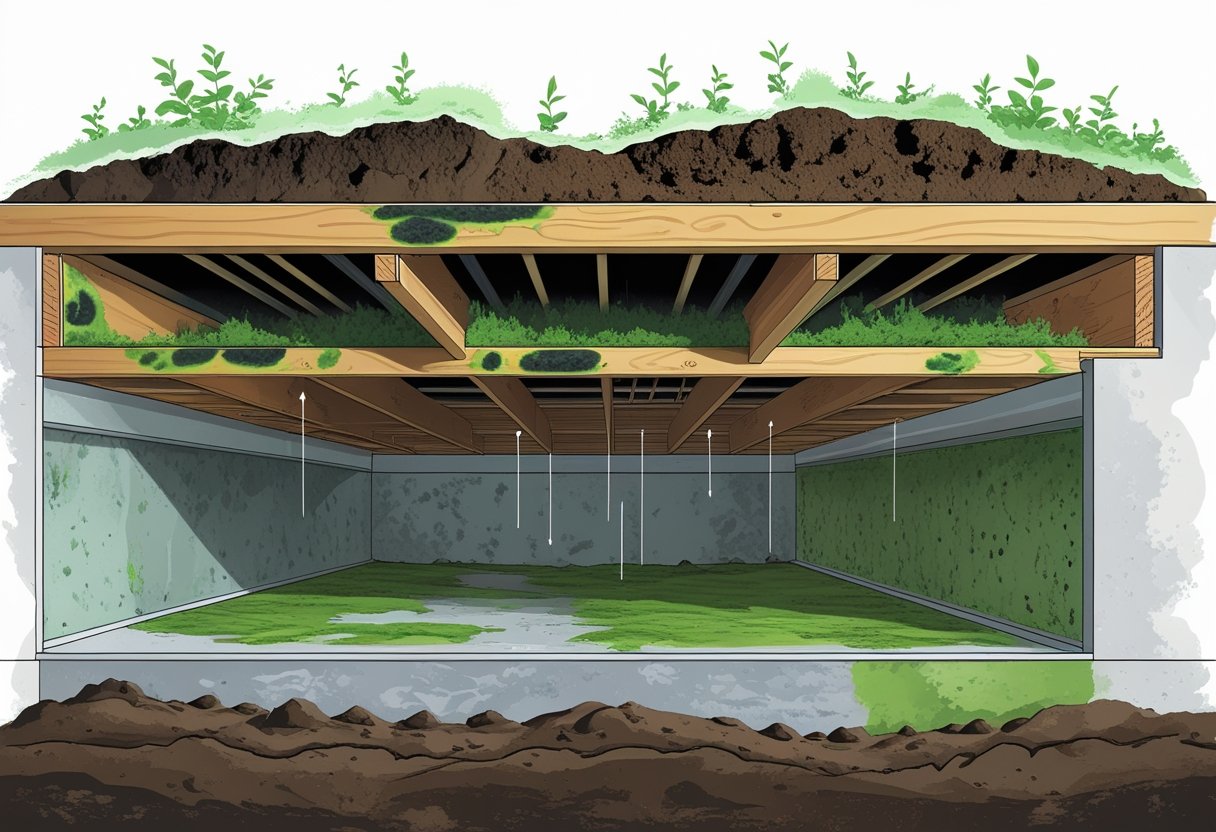
Spores can move into your HVAC system, settle on surfaces, and cause allergic reactions or breathing issues. Over time, mold can even weaken wood and other materials in your home’s structure.
These problems usually develop quietly, so catching them early is key.
How Mold in Your Crawl Space Spreads Through Your Home
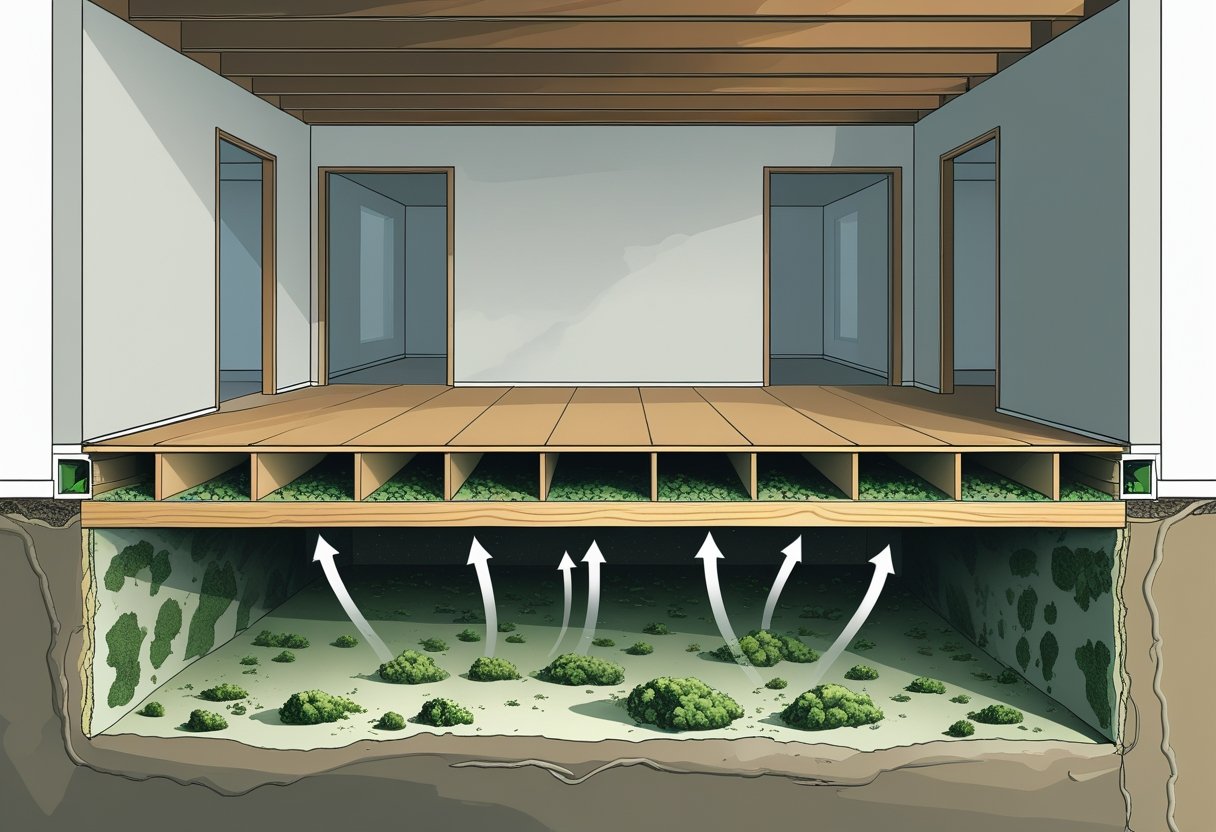
Mold in crawl spaces doesn’t just stay put. Spores travel with air movement, contact, and shared systems, showing up in living spaces and changing your air quality.
Pathways for Mold Spores
Spores often ride on airflow. Warm air rises, pulling cooler crawl space air up through floor gaps, plumbing holes, or ductwork.
HVAC systems can spread spores if ducts run through or draw air from the crawl space. Even tiny leaks let spores reach multiple rooms.
Moisture and temperature swings can push humid, spore-filled air upward. That boosts the odds of mold settling in new spots.
Common entry points for spores:
- Floor vents and return air grilles
- Cracks in subflooring
- Gaps around pipes and wiring
Impact on Indoor Air Quality
Once spores get inside, they mix with indoor air and can be breathed in. This often leads to stale air and a musty smell that clings to carpets, furniture, and fabrics.
High humidity inside the house helps spores take root on walls, ceilings, or window frames—especially in rooms with weak airflow.
Spores are light enough to float around for a while. They can move from room to room even if there’s no direct airflow from the crawl space.
Factors that affect air quality:
- How many spores get inside
- Indoor humidity
- Ventilation and filtration
Transfer to Living Areas
Spores can stick to clothing, shoes, or boxes you store in the crawl space. Bringing these items inside brings spores right into your living areas.
Pets can also track spores inside if they have access to the crawl space. This skips air pathways and drops spores on floors, furniture, and bedding.
Sometimes, water damage or leaks connect the crawl space to interior walls or floors. That lets dampness and mold move inside, giving spores a new place to grow.
Transfer examples:
- Moving boxes or tools from the crawl space
- Pets going between crawl space and living areas
- Plumbing or repairs that disturb moldy materials
Health Risks Associated with Crawl Space Mold
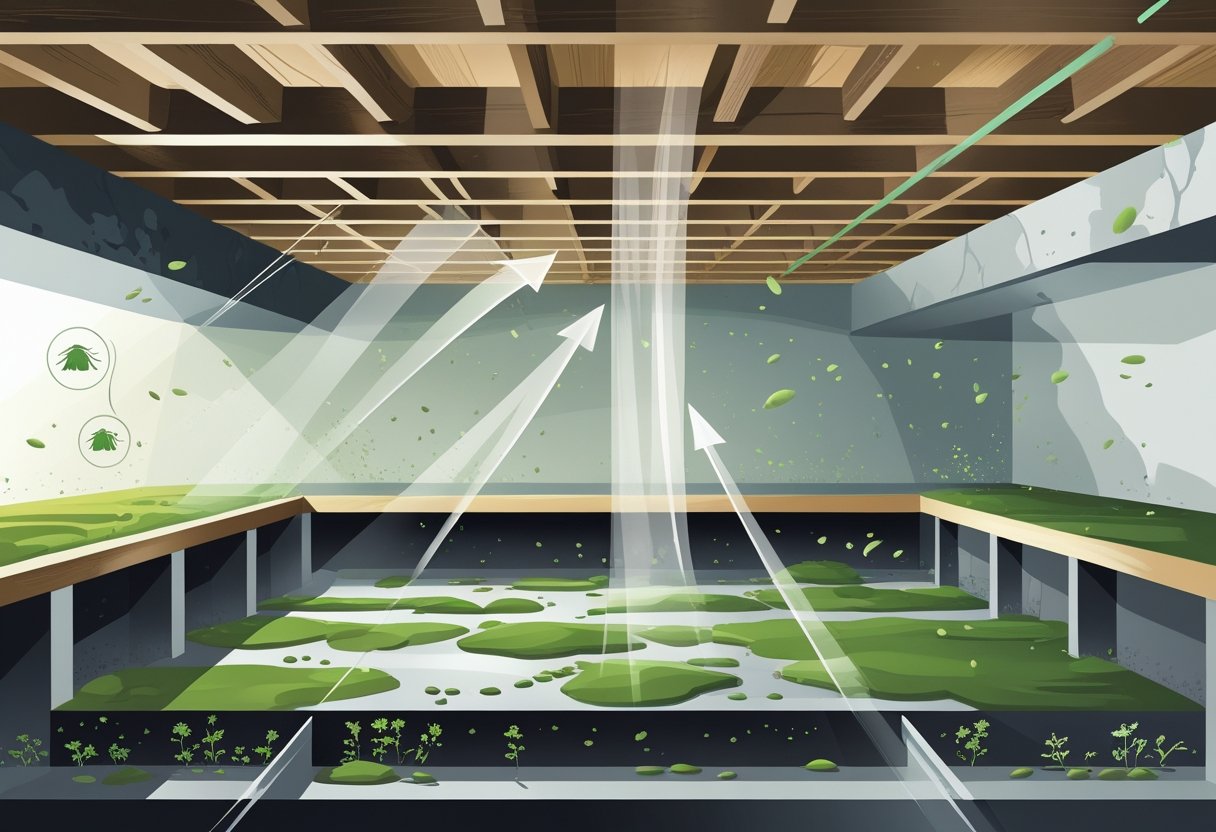
Mold in a crawl space can send spores and particles into your air, which then move into your living spaces. These can cause breathing problems, allergies, and a range of symptoms for sensitive folks.
Respiratory Issues and Asthma
Mold spores are tiny enough to get into your lungs. They can irritate airways and cause coughing, wheezing, or shortness of breath.
People with asthma may have more flare-ups. Mold can even make their usual treatments less effective.
If you live in a humid or poorly ventilated home, crawl space mold can add to long-term breathing problems. Even those without asthma might notice chest tightness or trouble breathing after a while.
Mold Allergies and Sensitivities
Some people’s immune systems react strongly to mold. This is called a mold allergy. Aspergillus and Cladosporium—both common in Atlanta crawl spaces—are frequent triggers.
Even low mold levels can set off allergies. Symptoms might show up right away or after repeated exposure.
People with sensitivities, even without an allergy diagnosis, can feel discomfort. They might get nasal irritation, itchy eyes, or skin rashes when exposed to moldy air.
Symptoms of Mold Exposure
Mold affects people differently depending on their age, health, and sensitivity. Here’s what to watch for:
| System Affected | Possible Symptoms |
|---|---|
| Respiratory | Coughing, wheezing, congestion |
| Eyes | Itching, redness, watery eyes |
| Skin | Rash, dryness, irritation |
| General | Fatigue, headaches |
Symptoms might show up slowly, especially if you don’t realize there’s mold below. Kids, older adults, and folks with weaker immune systems usually have stronger reactions.
Sometimes, symptoms get better fast once you leave the house, but if you keep getting exposed, they’ll probably come back.
Structural and Property Damage from Mold
Mold in a crawl space can weaken your home’s support, break down materials, and lower resale value. It usually starts in damp, poorly ventilated areas and can spread if ignored.
Foundation and Support Compromises
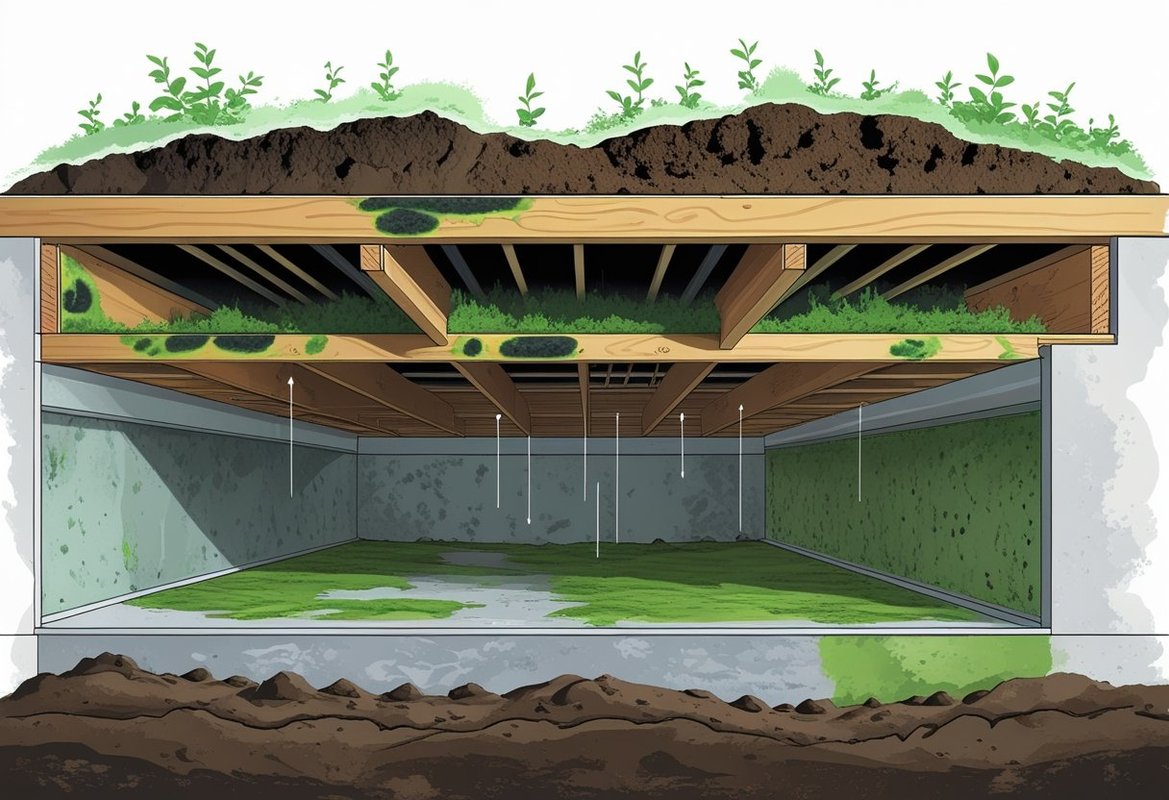
Mold doesn’t eat concrete, but it can damage wooden beams, joists, and subflooring near the foundation. Ongoing moisture can lead to wood rot, directly weakening the parts that hold your house up.
When beams lose strength, floors might sag or get uneven. That puts stress on walls, doors, and windows, causing alignment problems.
Moisture and mold can also corrode metal fasteners, nails, and brackets. Over time, this weakens the structure and may need costly repairs to fix.
Deterioration of Building Materials
Mold loves organic stuff like wood, insulation, and drywall. It can stain, smell, and make materials brittle or crumbly.
In crawl spaces, you’ll often see mold on floor joists, subfloor sheathing, and insulation. Once these materials break down, they can’t insulate or support your home properly.
High humidity and mold can also invite decay fungi, which dig deeper into wood. This kind of damage is worse and might require replacing entire sections.
Long-Term Property Value Impact
Visible mold, musty smells, and structural issues make a house harder to sell. Buyers in places like Marietta, GA, or Sandy Springs, GA, see these as red flags and might ask for repairs or price cuts.
Home inspectors usually check crawl spaces for mold. If they find it, sales can stall or even fall through.
Repairing structural damage, replacing materials, and handling [[[[[[[[mold remediation in Atlanta](https://water-damage-atlanta.com/atlanta/mold-remediation)](https://water-damage-atlanta.com/atlanta/mold-remediation)](https://water-damage-atlanta.com/atlanta/mold-remediation)](https://water-damage-atlanta.com/atlanta/mold-remediation)](https://water-damage-atlanta.com/atlanta/mold-remediation)](https://water-damage-atlanta.com/atlanta/mold-remediation)](https://water-damage-atlanta.com/atlanta/mold-remediation)](https://water-damage-atlanta.com/atlanta/mold-remediation), GA, can get expensive. Even after cleanup, documentation of mold issues can linger and make future buyers wary.
Common Causes of Mold Growth in Crawl Spaces
Mold usually pops up when extra moisture gets trapped in the crawl space. Humidity, leaks, and bad airflow create the perfect breeding ground for mold on wood, insulation, and more.
High Humidity and Poor Moisture Control
Crawl spaces in humid spots like Decatur, GA, or during rainy seasons, often have high moisture. Warm, moist air sneaks in and condenses on cool surfaces, feeding mold.
Without moisture control—like vapor barriers or dehumidifiers—humidity can stay above the safe 30–50% range. That’s when mold grows on joists, beams, and insulation.
Moisture from unsealed soil can also rise up. This keeps the crawl space damp and hard to dry out naturally.
Standing Water and Water Leaks
Standing water is a mold magnet. Even small puddles under your home can boost humidity and soak wood or insulation.
Common culprits:
- Plumbing leaks from pipes running through the crawl space
- Bad drainage around the foundation
- Heavy rain leaking in through vents or wall cracks
If water sits for more than a day or two, mold can start to grow. Fix leaks fast and improve drainage to stop moisture from building up.
Sometimes, you’ll need a sump pump or to regrade the soil around your home in Roswell, GA, to keep water away from the foundation.
Insufficient Ventilation
Poor airflow lets damp air hang around, making it easy for mold to thrive. Crawl spaces with blocked vents or no ventilation often trap humidity from both the ground and outdoors.
Older homes might have vents that are too small or in the wrong spots, so air doesn’t move well. That keeps surfaces damp.
In some Atlanta-area climates, open vents can actually bring in more moisture. In these cases, sealing the crawl space and adding a dehumidifier or mechanical ventilation helps keep things dry.
Signs and Symptoms of Mold in Crawl Spaces
Moisture and bad airflow under your home can lead to crawl space mold that affects structure and indoor air. Spotting it early depends on changes in smell, looks, and health that trace back to the crawl space.
Musty Odors in the Home
A lingering musty smell is one of the biggest signs you’ve got crawl space mold. That smell comes from spores and MVOCs drifting up into your living space.
It’s often strongest near floor vents, baseboards, or rooms right above the crawl space. Cleaning inside won’t get rid of it if the source is below.
The smell tends to get worse after rain, in humid weather, or when the HVAC is running. To get rid of it, you need to tackle both the mold and the moisture feeding it.
Visible Mold and Staining
You might spot mold in crawl spaces as black, white, green, or brown patches on wood, insulation, or concrete. Stains may look like dark streaks or spots that don’t wipe away.
Common places to check: floor joists, subflooring, and around HVAC ducts or plumbing where condensation happens. Even a small patch can mean there’s more hidden out of sight.
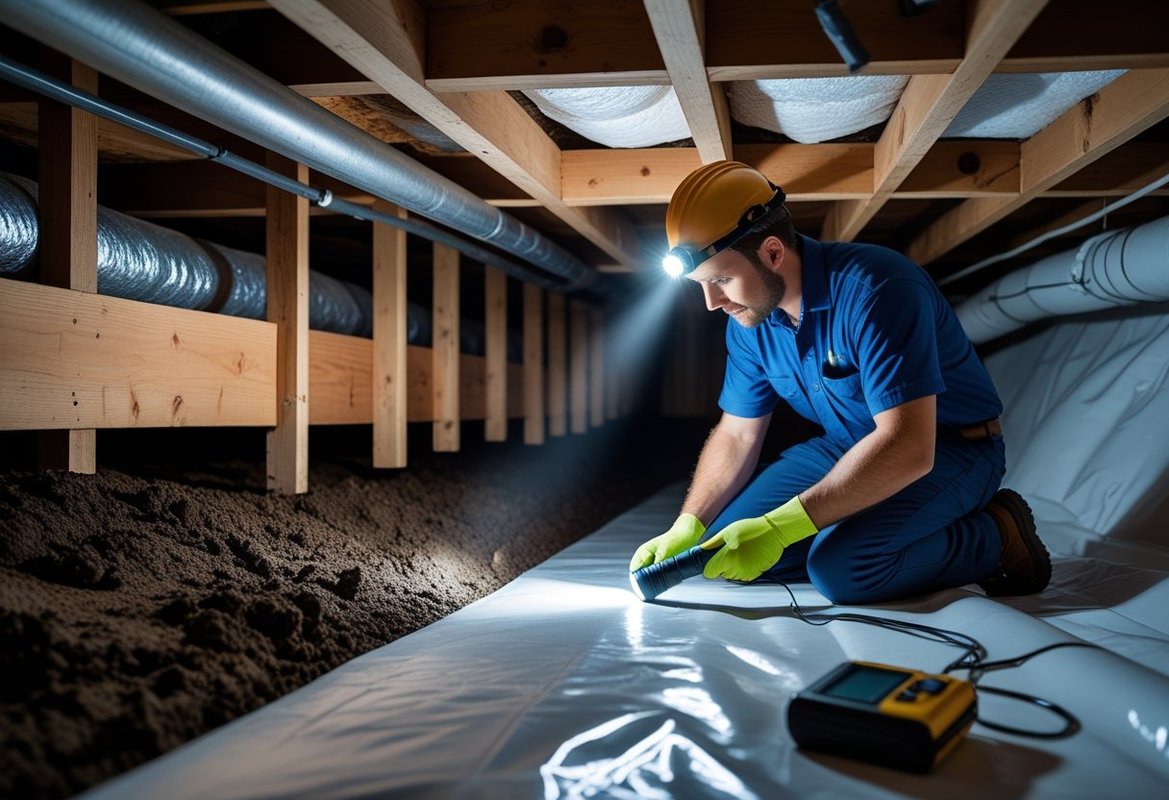
Water damage like warped wood or peeling insulation often shows up with visible mold. Use a flashlight and check regularly to catch it early.
Unexplained Health Symptoms
Mold in your crawl space can send spores up through gaps, vents, or ductwork. This often leads to coughing, congestion, or nasal irritation—especially in sensitive people.
Some folks notice more sneezing, watery eyes, or skin irritation indoors, and feel better when they leave the house.
Kids, seniors, and people with asthma or weaker immune systems are usually hit hardest. If symptoms line up with time spent at home, mold exposure from the crawl space could be the culprit.
Effective Mold Remediation and Removal Strategies
Getting rid of mold in your crawl space means removing what’s there, fixing the moisture source, and making sure it doesn’t come back. The right fix depends on how bad it is, what type of mold you’ve got, and safety risks.
Professional Mold Remediation
Professional mold remediation gives you a thorough, controlled way to get rid of mold. Experts use HEPA vacuums, antimicrobial treatments, and barriers to keep spores from spreading.
They also find and repair the real causes—leaks, bad airflow, or high humidity. That keeps mold from coming back after cleanup.
A pro crew can handle toxic molds like Stachybotrys chartarum (black mold), which need strict safety steps. They follow industry rules like IICRC S520 to make sure the work is safe and up to code.
If you’ve got a big problem—like mold covering more than 10 square feet, or if you need structural repairs in Smyrna, GA, or anywhere around [Atlanta—it’s best to call in the pros.
DIY Mold Removal](https://water-damage-atlanta.com/atlanta/mold-remediation) Considerations
If you spot small, surface-level mold patches, you might be able to handle them yourself with the right tools. Usually, this means scrubbing the area with a detergent or a store-bought mold cleaner.
Moisture control is crucial. If you don’t fix leaks or improve airflow, mold’s just going to come back.
Try installing a vapor barrier and keep humidity under 60%.
Stick to cleaning non-porous surfaces like metal, glass, or sealed concrete. Porous stuff—like insulation or raw wood—often needs to go, since mold burrows deep inside.
If you’ve got a lot of mold, a strong musty smell, or you’re feeling sick, it’s time to call in the pros. If you’re in Decatur, GA or Alpharetta, GA, finding local help is easy.
Safety Precautions During Removal
Mold removal can kick spores into the air, so you’ll need some gear. Grab:
- N95 or better respirator
- Gloves (nitrile or rubber work well)
- Goggles (no vent holes)
- Disposable coveralls or clothes you can wash hot
Seal off the work area with plastic sheeting to keep spores from spreading.
Ventilation matters, but don’t use fans that blow into the rest of the house. Go with exhaust fans that vent outside.
Bag and seal any contaminated stuff before tossing it out. That way, you don’t accidentally spread mold around.
Preventing Mold in Your Crawl Space
Crawl space moisture usually comes from damp soil, poor drainage, or humid air. Tackling these issues helps protect your home’s structure and the air you breathe.
Installing a Vapor Barrier
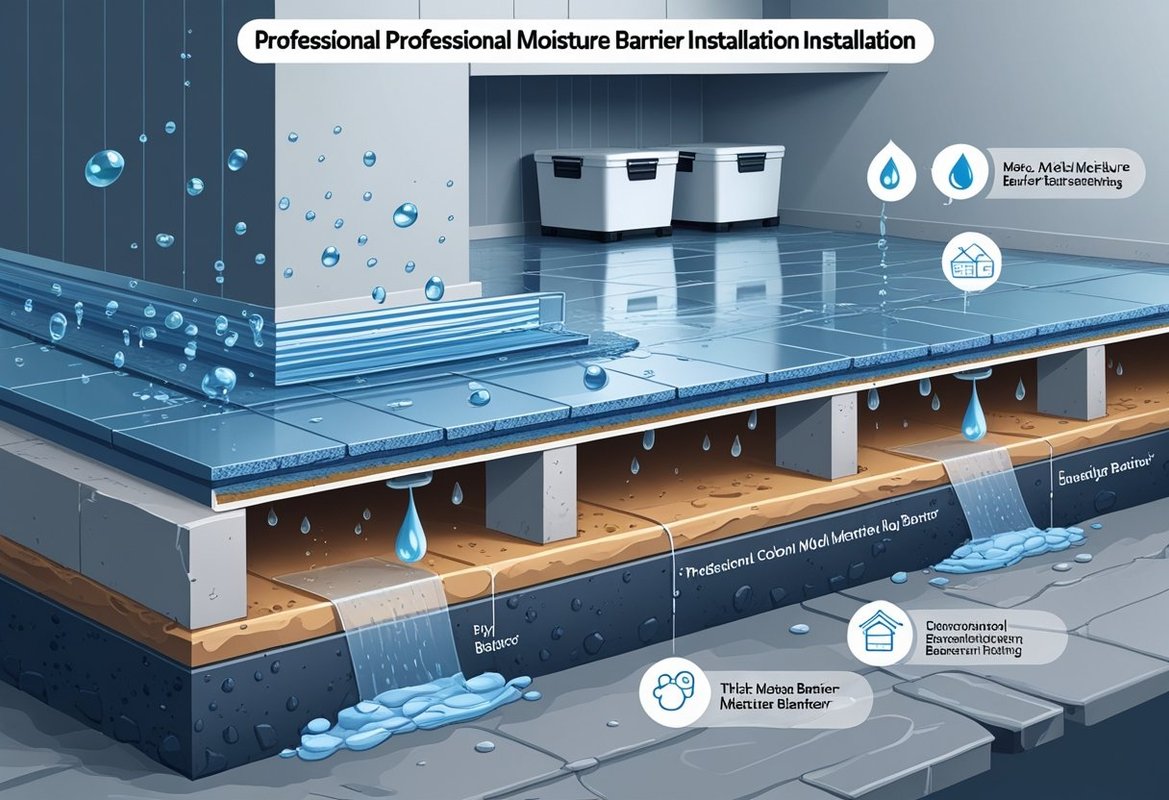
A vapor barrier is basically a thick sheet of plastic that blocks ground moisture. Cover the whole crawl space floor, including seams and edges, for the best results.
Seal the barrier to the foundation walls and around any piers. 6-mil polyethylene is common, but thicker plastic lasts longer.
For homes in Sandy Springs, GA or Roswell, GA, a vapor barrier works best with other steps—like sealing vents or running a dehumidifier. This combo keeps humidity down and mold at bay.
Improving Drainage and Ventilation
Water pooling near your foundation can seep into the crawl space. Slope the soil away from the house, and extend downspouts at least 6 feet from the foundation.
Got a lot of rain? Consider a perimeter drain or sump pump to move water out before it sneaks in.
Ventilation can help, but in humid spots like Atlanta, GA, open vents might just let in more moisture. Sealing vents and using mechanical ventilation or a dehumidifier usually works better here.
Routine Inspections and Maintenance
Check your crawl space regularly for problems. Look for things like damp insulation, water stains, or that telltale musty smell.
Do inspections at least twice a year, especially after heavy rain or snowmelt. Make sure vapor barriers aren’t torn and drainage systems are clear.
Here’s a simple checklist:
- Check humidity with a hygrometer
- Look for standing water
- Inspect foundation walls for cracks
- Check insulation for dampness or mold spots
Fixing issues fast keeps moisture in check and saves you from expensive [[[[[[[[mold remediation—especially if you’re in Marietta](https://water-damage-atlanta.com/marietta/mold-remediation)](https://water-damage-atlanta.com/marietta/mold-remediation)](https://water-damage-atlanta.com/marietta/mold-remediation)](https://water-damage-atlanta.com/marietta/mold-remediation)](https://water-damage-atlanta.com/marietta/mold-remediation)](https://water-damage-atlanta.com/marietta/mold-remediation)](https://water-damage-atlanta.com/marietta/mold-remediation)](https://water-damage-atlanta.com/marietta/mold-remediation), GA or nearby.
Browse [crawl space [[[[[[[mold removal companies near Atlanta](https://water-damage-atlanta.com/atlanta/mold-remediation)](https://water-damage-atlanta.com/atlanta/mold-remediation)](https://water-damage-atlanta.com/atlanta/mold-remediation)](https://water-damage-atlanta.com/atlanta/mold-remediation)](https://water-damage-atlanta.com/atlanta/mold-remediation)](https://water-damage-atlanta.com/atlanta/mold-remediation)](https://water-damage-atlanta.com/atlanta/mold-remediation)](https://water-damage-atlanta.com/marietta/companies) to find vetted professionals in your area.
Frequently Asked Questions
What are the health risks associated with mold presence in a crawl space?
Mold exposure can trigger allergy-like symptoms—coughing, sneezing, skin irritation.
Some molds can make asthma worse. If you’re sensitive, you might also get headaches, feel tired, or have sinus trouble.
Can mold in a crawl space affect indoor air quality in the rest of the home?
Absolutely. Mold spores can travel through your HVAC system or sneak up through floors and cracks.
You might notice musty odors or more allergies upstairs, even if you never see the mold itself.
What are the signs that indicate a mold problem in a crawl space?
A musty smell is often the first clue.
Other signs: visible mold on wood or insulation, damp spots, peeling paint above the crawl space, or more allergy symptoms indoors.
What are the most effective methods for removing mold from a crawl space?
The best approach is usually a mix of scrubbing and chemical treatment.
Clean surfaces, use an EPA-approved mold cleaner, and make sure everything dries out completely.
How can homeowners prevent mold growth in their crawl spaces?
Keep moisture low—install a vapor barrier, seal vents, and run a dehumidifier if you need to.
Check regularly for leaks, standing water, or damaged insulation. Staying on top of maintenance makes a big difference.
Does professional mold remediation in a crawl space typically improve overall home value?
Getting professional mold remediation in your crawl space—say, in Marietta, GA—usually makes your place more attractive to buyers. Nobody wants to deal with hidden health problems or surprise repairs.
It might not always bump up your home’s value by thousands, but it sure helps you avoid those last-minute price drops when mold comes up during a sale.
For more on the root causes, see our guide on why your crawl space attracts mold and moisture.
Water Damage Atlanta Editorial Team
Restoration & Home Services Expert
We help Atlanta homeowners recover from water damage with trusted advice and local resources.