Crawl Space Encapsulation vs. Moisture Barrier: Which Is Right for Your Home?
Moisture in a crawl space can mess with your comfort, energy bills, and even the bones of your house. Two common fixes are a basic moisture barrier or full crawl space encapsulation.
Crawl Space Encapsulation vs. Moisture Barrier: Which Is Right for Your Home?
Moisture in a crawl space can mess with your comfort, energy bills, and even the bones of your house. Two common fixes are a basic moisture barrier or full crawl space encapsulation.
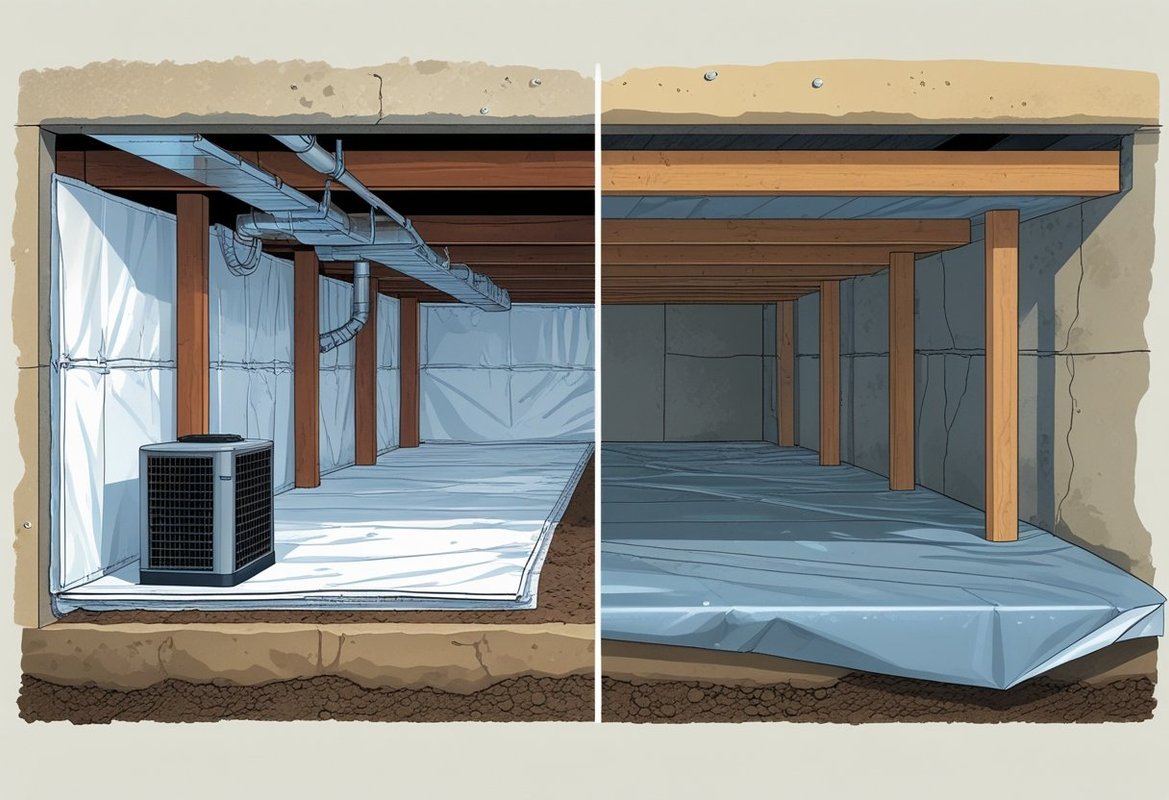
Encapsulation seals up the whole crawl space for maximum protection. A moisture barrier is simpler, mainly blocking vapor from the ground.
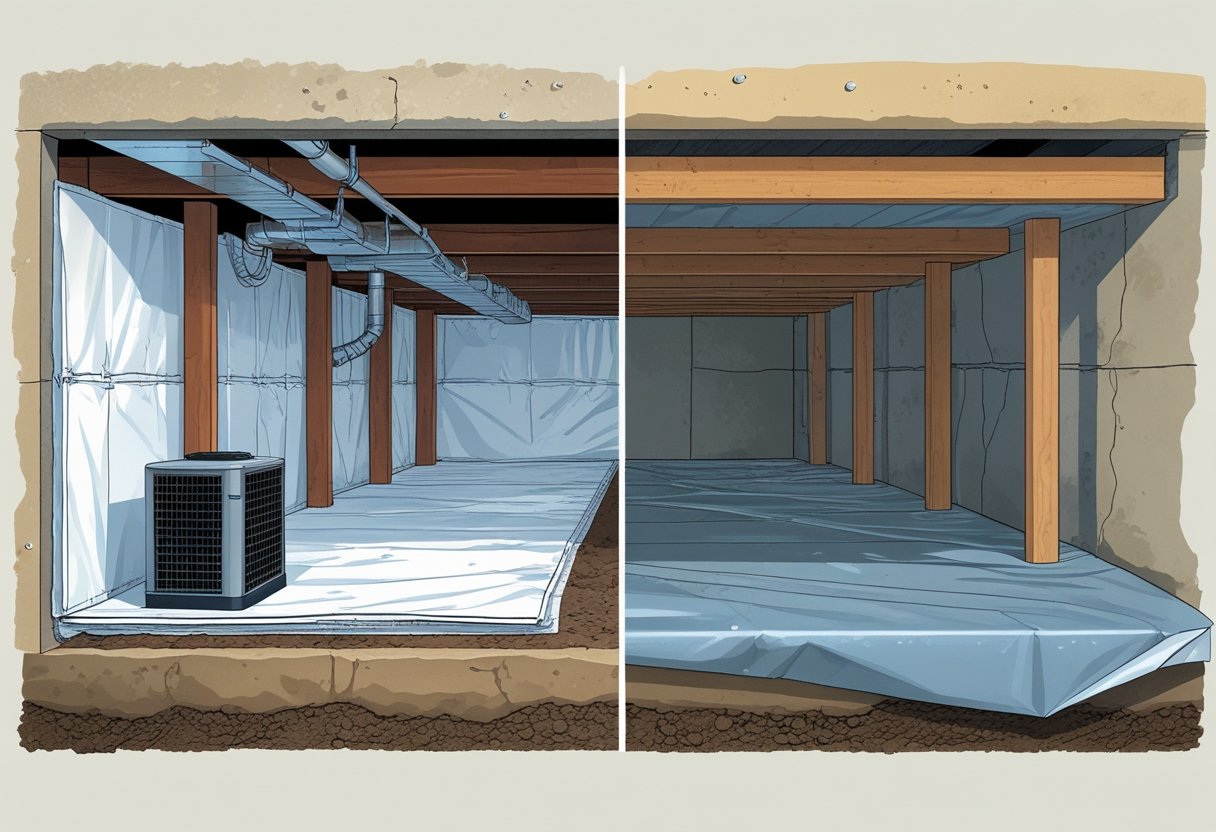
Your choice depends on the amount of moisture, crawl space condition, and your long-term plans. If you need to really control humidity or air quality, encapsulation is the big move.
Sometimes, just limiting ground vapor with a barrier is enough—and it costs less. Each method has its place, so it’s worth understanding what they actually do.
Let’s break down the basics and see which fits your home best—especially if you’re in the Atlanta, GA area, like [Marietta or Decatur.
Understanding Crawl Space](https://water-damage-atlanta.com/marietta/crawl-space-mold-removal) Moisture Issues
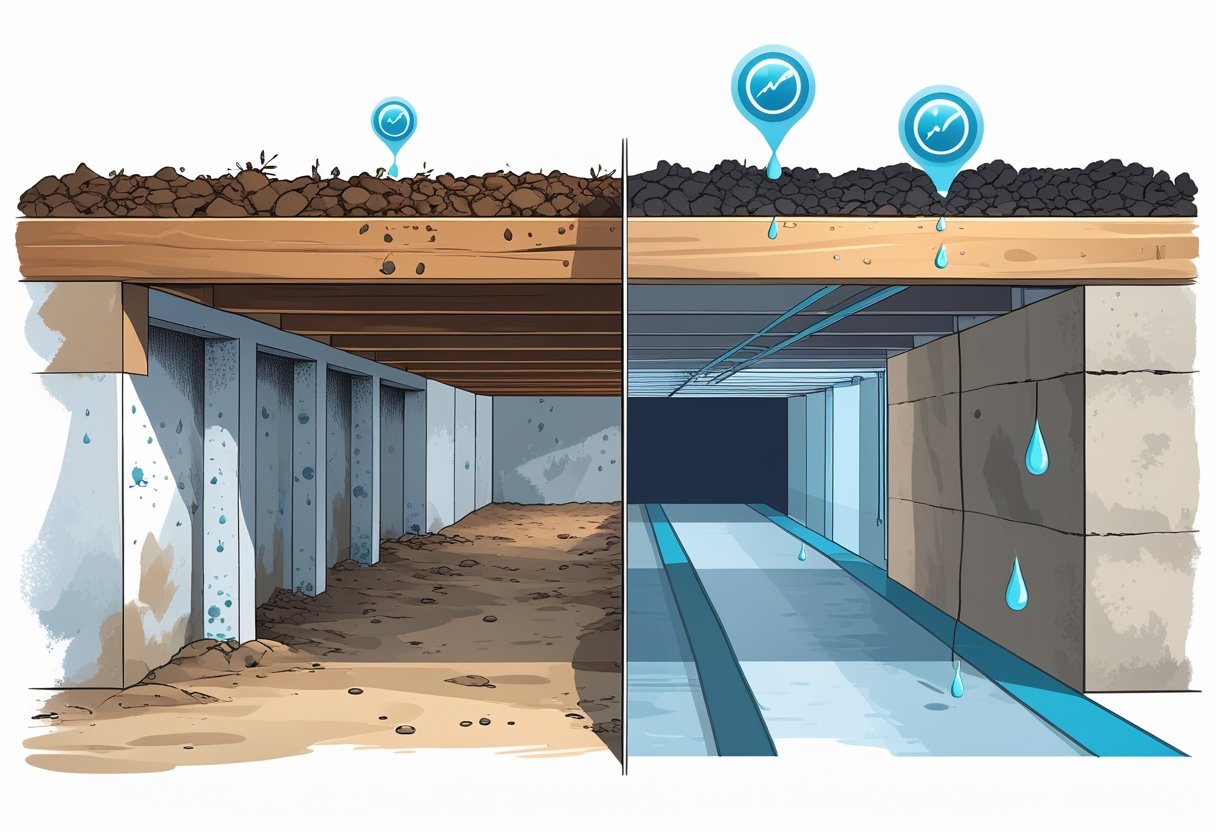
Crawl space moisture brings mold, wood rot, and lousy indoor air. It weakens the structure over time and draws pests and mildew.
Keeping things dry protects your house and everyone living in it.
Common Problems Caused by Excess Moisture
When water vapor gets in, mold and mildew can take over fast. They love damp, dark corners and will chew up surfaces while pumping spores into the air.
Pests like termites and rodents move in next. Termites snack on wet wood, and rodents just want a cozy, humid spot to nest.
You might notice musty smells drifting up from below. That’s a classic sign of crawl space trouble.
Main problems from crawl space moisture:
- Mold and mildew
- Pests
- Musty odors
- High indoor humidity
Impact on Structural Integrity
Moisture does more than stink up the place—it eats away at your home’s structure. Wood rot spreads through beams and flooring if left alone.
Floors can start to sag, and support systems get sketchy. Even metal parts like nails or ductwork can rust out, making things worse.
Keeping moisture out is key. If you’re in Sandy Springs, GA or Roswell, GA, regular crawl space checks can save you a lot of money and headaches down the road.
Effects on Indoor Air Quality
Crawl space moisture doesn’t just stay put—it seeps into the air you breathe. Studies show a big chunk of your indoor air comes from below.
If that air carries mold spores or humidity, it spreads everywhere. Allergies, asthma, or just a stuffy house can be the result.
Dust mites love humidity too, which means more sneezing. Drying out the crawl space helps keep the air cleaner and your home healthier.
What Is a Moisture Barrier?
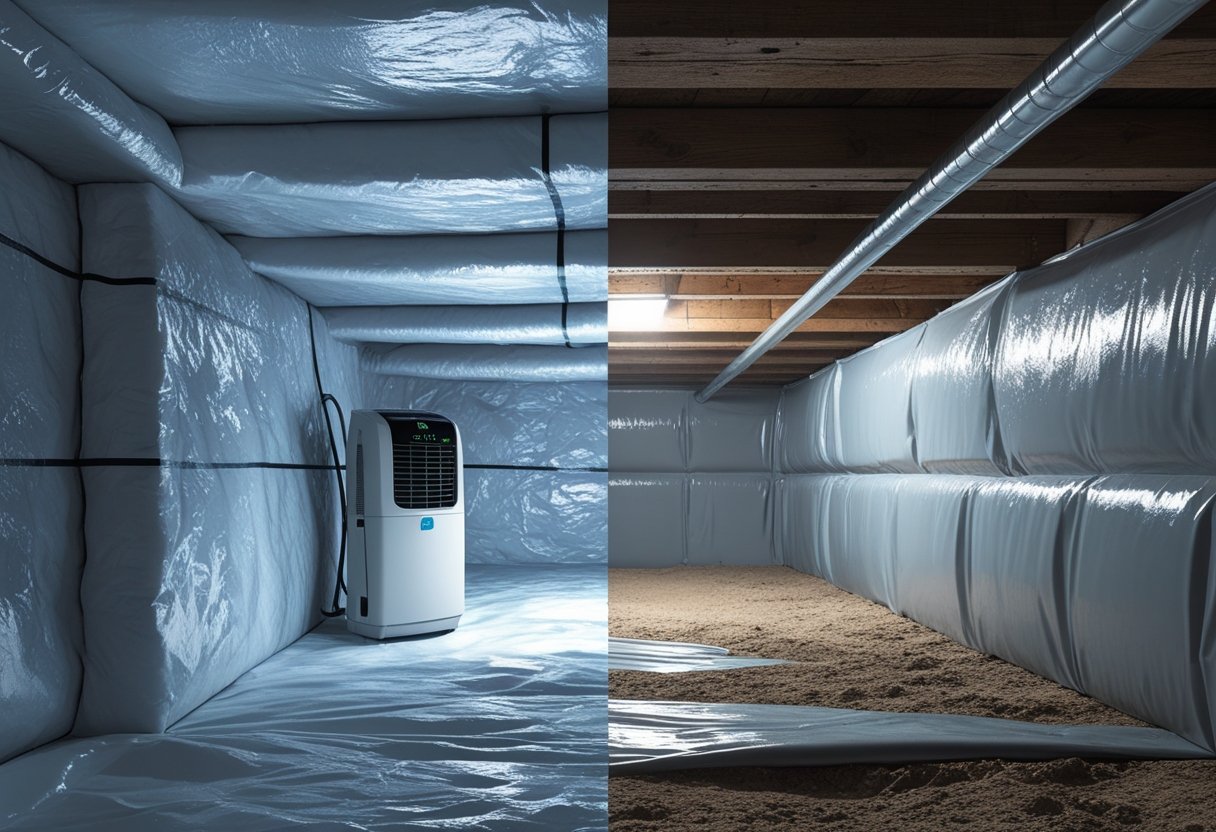
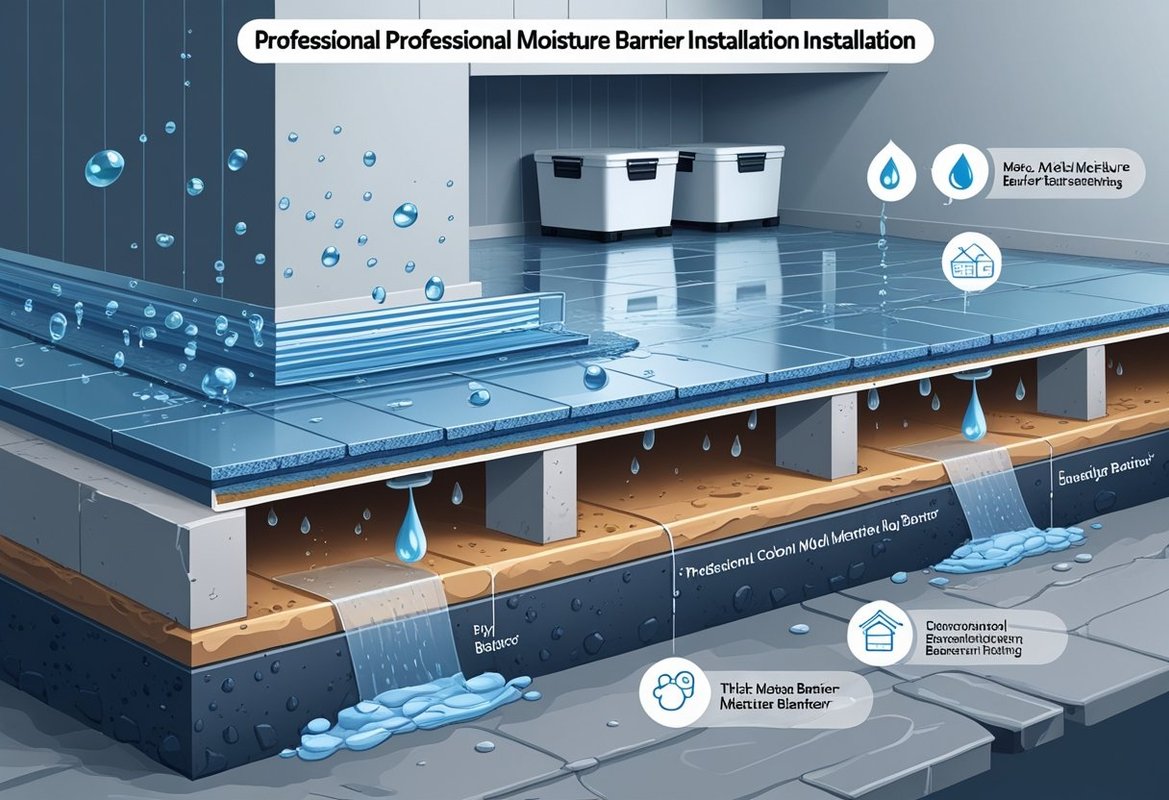
A moisture barrier—also known as a vapor barrier—is a sheet that stops water vapor from rising up out of the dirt. It helps keep humidity down, mold in check, and wood from rotting.
Definition and Purpose
Installers lay a moisture barrier over the crawl space soil. Its job is to block ground moisture from sneaking into the air above.
Without it, vapor raises humidity and invites mold, mildew, and decay. Unlike encapsulation, a basic barrier just covers the ground—not the walls.
It’s a partial fix, but it’s cheaper and often enough for homes with moderate issues.
Moisture barriers are handy in places with wet soil or homes built right on the earth. They help stabilize indoor air and lighten the load on your HVAC system.
Materials Used in Vapor Barriers
Most vapor barriers use polyethylene plastic sheets. Thickness ranges from 6-mil to 20-mil.
Thicker is better for durability. Thinner sheets cost less but can tear easily, especially if you’re crawling around down there.
Some have fiber mesh for extra strength. Opaque or white sheets are easier for spotting leaks or moisture problems.
Look for:
- Puncture resistance
- Good seam overlap
- Moisture rating that fits your local [Atlanta, GA soil and climate
Vapor Barrier](https://water-damage-atlanta.com/atlanta/crawl-space-mold-removal) Installation Basics
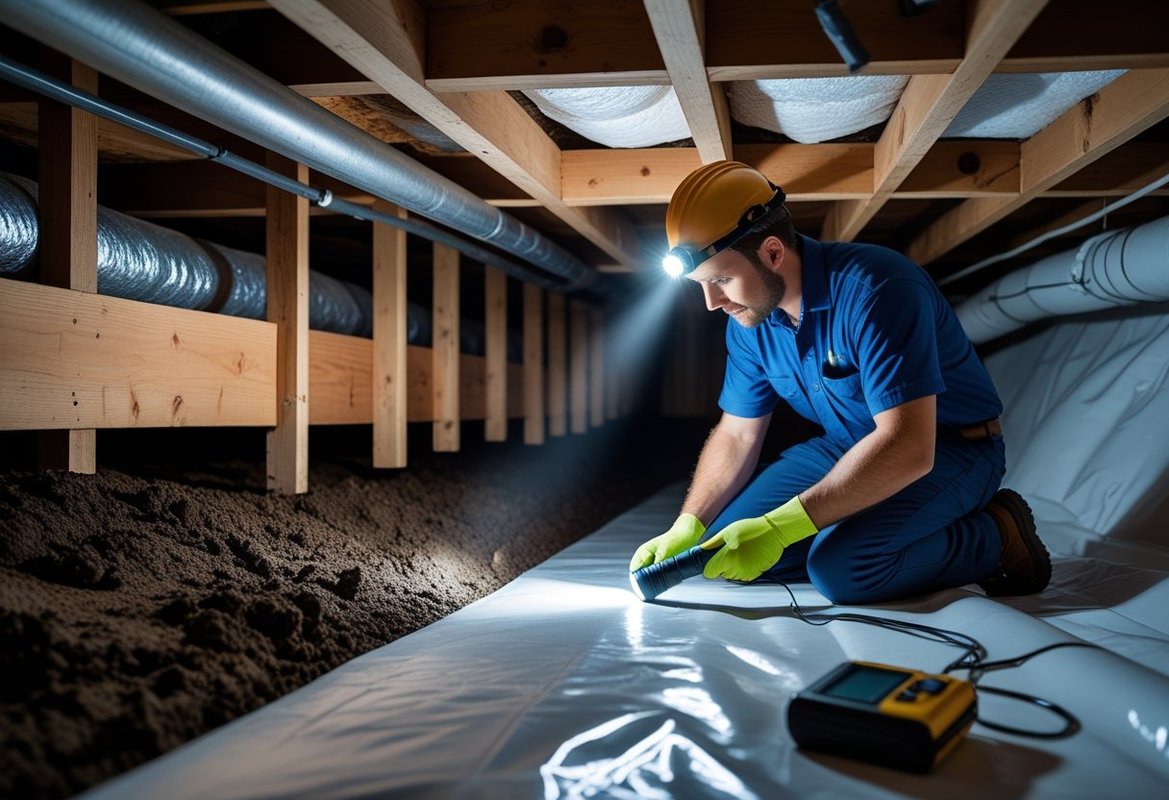
First, clear out rocks and debris. Then roll out the plastic sheets to cover the soil, overlapping seams by 6–12 inches.
Secure them with landscape stakes or tape. Sealing seams matters—gaps let vapor through.
The barrier should reach the foundation walls. Some folks cover a little bit of the wall for better results.
Check it now and then for rips or water pooling. If it stays intact and dry, it should last for years with hardly any fuss.
What Is Crawl Space Encapsulation?
Encapsulation means sealing up the whole crawl space to keep moisture out, boost air quality, and protect the structure. It’s a bigger job, using thicker barriers and sealing everything up tight.
Encapsulation Process Overview
First, block off all crawl space vents so outside air can’t get in. Then, cover the floor, walls, and sometimes piers with tough, reinforced vapor barrier plastic.
Seal the seams with special tape or glue. Walls and edges get sealed too, keeping groundwater vapor outside.
If there’s standing water, install drainage first. Once everything’s dry and sealed, the crawl space becomes a closed, controlled zone.
Components of an Encapsulation System
A good system usually includes:
- Vapor barrier for floor and walls
- Sealing materials like tape and caulk
- Vent covers to block outside air
- Optional drainage (sump pump or drains) if water’s a problem
Thicker barriers (12–20 mils) last longer and stand up to wear. Everything works together to keep moisture, mold, and pests away.
Role of Dehumidifiers and Insulation
Most encapsulated crawl spaces need a dehumidifier to keep humidity below 60%. Even the best barriers let in a little moisture.
A commercial dehumidifier keeps things dry and helps stop mold. Some folks add wall insulation too—rigid foam board works best since it doesn’t soak up water or sag.
With both, you boost energy efficiency and make the crawl space part of your home’s conditioned space.
Crawl Space Encapsulation vs. Moisture Barrier: Key Differences
Both options cut crawl space humidity, but they’re not the same. One seals it all; the other just covers the ground.
Your choice affects moisture, energy use, and how your HVAC system runs—especially if you live in places like [Alpharetta, GA or Smyrna, GA.
Scope of Protection
A moisture barrier](https://water-damage-atlanta.com/alpharetta/crawl-space-mold-removal) covers the dirt floor with thick plastic. It slows vapor from the soil but leaves walls and vents open.
Encapsulation seals the floor, walls, and often the vents. This blocks both ground and outside air moisture.
In high-humidity spots around Atlanta, GA, encapsulation keeps things drier and safer than just a floor barrier.
Effectiveness in Moisture Control
Barriers slow down ground evaporation but don’t block humid air from vents or walls. So, crawl spaces with barriers alone can still feel damp or musty.
Encapsulation closes off all those extra moisture sources. By sealing vents and lining walls, it keeps humidity more stable.
If you’ve got serious moisture problems, encapsulation usually does a better job at stopping mold and structural damage. It costs more up front but can save you on repairs later.
Energy Efficiency and HVAC Impact
A crawl space with only a barrier won’t do much for your energy bills. Humid air still seeps in, making your HVAC work harder.
Encapsulation creates a conditioned space, so less humid air gets inside. That means your AC runs more efficiently, and you might even notice lower bills.
It can also help your HVAC system last longer since ducts and parts stay drier and cleaner. That’s a win for long-term performance.
Benefits and Drawbacks of Each Solution
Different homes call for different crawl space fixes. Some folks just need a basic barrier, while others need the whole space sealed up.
Advantages of Moisture Barriers
A moisture barrier is simple and affordable. It blocks most soil moisture, cutting down on mold and rot.
Installers can put one in fast, without tearing up your crawl space. Thicker sheets (over 20 mil) last longer and resist tearing.
Barriers help reduce musty smells and improve air quality. They’re not perfect, but they’re a solid step up from nothing.
Limitations of Moisture Barriers
Barriers only cover the ground—air and humidity still get in through vents and walls. In rainy or humid places like College Park, GA, that can be a problem.
They don’t seal the whole space, so temperature swings and condensation can still happen. That means you won’t see much boost in energy efficiency.
Durability depends on thickness and how well it’s installed. Thin sheets can tear or shift, and unsealed seams let vapor sneak by.
Pests can chew through the plastic, too, so it’s not a fix-all.
Advantages of Encapsulation
Encapsulation means sealing the whole crawl space—floors and walls—with a heavy vapor barrier. Vents get sealed, and a dehumidifier often gets added.
This setup keeps moisture, mold, and wood decay in check. Lower humidity helps protect your home’s structure and can boost indoor air quality.
You’ll likely see better energy efficiency too. Conditioned air stays inside, which can trim down heating and cooling bills.
Encapsulation makes the crawl space cleaner and more usable for storage. With sealed walls and a tough liner, the area stays drier and more stable.
If you’re getting encapsulation in Marietta, GA or Decatur, GA, you’ll notice a difference in comfort and upkeep.
Limitations of Encapsulation
The upfront cost for encapsulation is much higher than a simple vapor barrier. You need to seal vents, insulate walls, and sometimes install drainage or a sump pump.
Professional installation is a must. If the work’s sloppy, moisture can get trapped and cause the same headaches you’re trying to avoid.
Ongoing maintenance matters too. Dehumidifiers need regular servicing, or the whole system loses its punch.
Encapsulation uses more materials and energy during setup. While it can save energy later, the initial resource use is higher than a basic barrier.
How to Choose the Right Solution for Your Crawl Space
Your best bet depends on how much moisture you’re dealing with, your local Atlanta climate, and how much maintenance you’re willing to handle. Cost, durability, and energy impact all play a role.
Factors to Consider
Start by checking the current moisture level in your crawl space. If you see water pooling on the soil or walls, encapsulation usually works better. A simple vapor barrier helps if it’s just mild ground moisture.
Budget is a biggie. Vapor barriers cost less upfront but don’t cover as much. Encapsulation costs more because it seals the walls, floor, and vents, but it can cut future repair bills.
Think about energy efficiency too. Encapsulation helps regulate crawl space temps, so you might pay less for heating and cooling. Vapor barriers don’t insulate as much.
Decide if you want a quick fix or a long-term solution. Vapor barriers are faster and cheaper to install. Encapsulation gives you more complete protection, especially in places like Alpharetta, GA or Sandy Springs, GA.
Suitability for Different Climates and Homes
Climate really matters. In humid areas like Atlanta, GA, encapsulation blocks outside air and moisture better. Vapor barriers alone often can’t stop condensation on walls and joists.
In dry climates, a vapor barrier might be enough to control ground moisture. If outside humidity is low, you might not need full encapsulation unless there’s poor ventilation or other issues.
The home’s age and type matter too. Older houses with vented crawl spaces usually benefit from encapsulation, which seals vents and stabilizes conditions. Newer homes with good drainage might only need a vapor barrier if soil moisture is the main problem.
If your HVAC or ductwork runs through the crawl space, encapsulation helps protect those systems from moisture damage and boosts efficiency.
Frequently Asked Questions
Encapsulation and moisture barriers both fight crawl space moisture, but their coverage, cost, and long-term performance differ. Climate, installation method, and upkeep also affect which one fits your home best.
What are the key differences between crawl space encapsulation and moisture barriers?
A moisture barrier is just a plastic sheet over the soil. It slows vapor from rising into the crawl space.
Encapsulation seals the whole area—floors, walls, and vents—with thicker material and sometimes insulation. This creates a controlled environment and offers stronger moisture protection than a floor-only barrier.
How does climate impact the decision to encapsulate a crawl space or install a moisture barrier?
In humid regions like the Atlanta metro, encapsulation seals out air and moisture from multiple sources, not just the ground.
In drier areas, a moisture barrier can be enough since soil vapor is the main issue and outside humidity isn’t as big a deal.
What are the long-term benefits of crawl space encapsulation compared to moisture barriers?
Encapsulation reduces mold risk, improves indoor air quality, and can lower energy costs by stabilizing temperature and humidity.
Moisture barriers mostly limit ground vapor but won’t stop wall seepage or humid air coming in through vents. The long-term benefits are more limited.
Can I install a moisture barrier or encapsulation system myself, or should I hire a professional?
You can try installing a basic moisture barrier yourself if the crawl space is easy to access and safe.
Encapsulation usually calls for a pro. You need to seal walls, vents, and sometimes add insulation or a dehumidifier. If you want it done right, hiring someone is the way to go.
What maintenance considerations should I be aware of for encapsulated crawl spaces versus moisture barriers?
Encapsulated crawl spaces need periodic checks of the seal, insulation, and any dehumidifier.
Moisture barriers should be inspected for tears, gaps, or shifting, since they only cover the ground and can get disturbed pretty easily—especially in places like Roswell, GA or Smyrna, GA where soil moisture can fluctuate.
What is the typical cost difference between installing a crawl space encapsulation system and a moisture barrier?
Moisture barriers usually cost less, especially around Atlanta, GA, Marietta, or Sandy Springs. You’ll pay a fraction of what full encapsulation would run because there’s less material and labor involved.
Encapsulation costs more since it seals the whole crawl space. Sometimes you’ll need insulation or even mechanical systems too, which drives the price up, but you do get a lot more protection.
Not sure which fits your situation? Start with what a crawl space moisture barrier actually is.
When you're ready to hire, browse [vetted [[[crawl space specialists near Atlanta](https://water-damage-atlanta.com/atlanta/crawl-space-mold-removal)](https://water-damage-atlanta.com/atlanta/crawl-space-mold-removal)](https://water-damage-atlanta.com/atlanta/crawl-space-mold-removal)](https://water-damage-atlanta.com/marietta/companies) to find certified specialists.
To get a professional assessment, browse [[[[crawl space specialists in Atlanta](https://water-damage-atlanta.com/atlanta/crawl-space-mold-removal)](https://water-damage-atlanta.com/atlanta/crawl-space-mold-removal)](https://water-damage-atlanta.com/atlanta/crawl-space-mold-removal)](https://water-damage-atlanta.com/marietta/companies) to find vetted contractors near you.

Water Damage Atlanta Editorial Team
Restoration & Home Services Expert
We help Atlanta homeowners recover from water damage with trusted advice and local resources.